
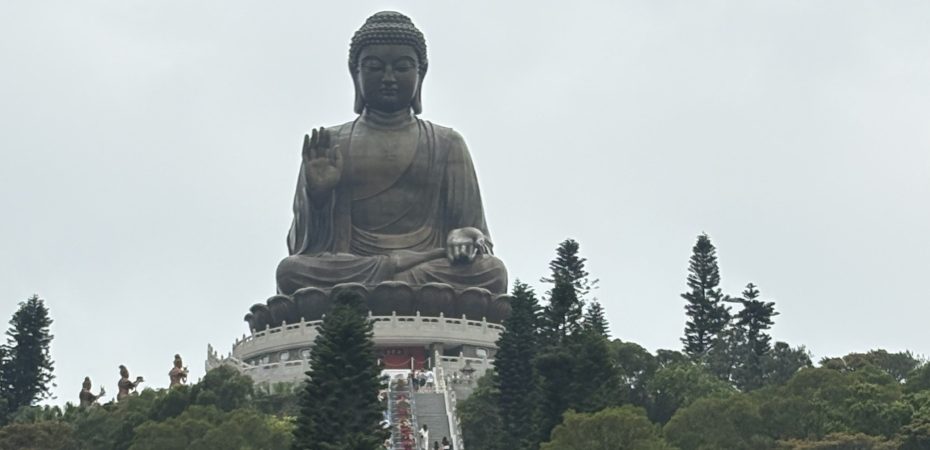
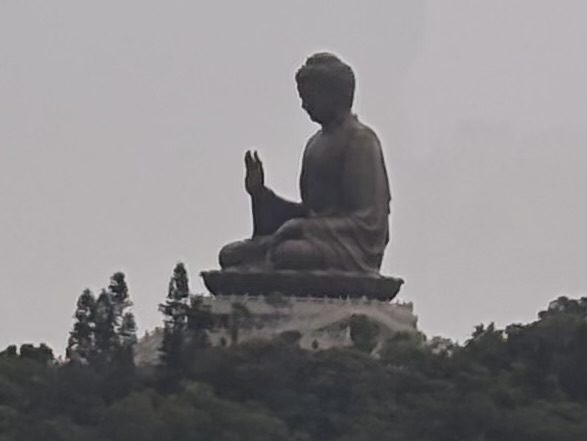
Lantau is the largest island of the 260 islands of Hong Kong. It is better known for the the airport and the modern township developments rather than the hilly rugged terrain and fishing villages – Something which most of us do not associate with Hong Kong. It is on one of these hills that the Tian Tan Buddha is located – a 35 meter tall statue of the sitting Buddha claimed to be among the largest in the world. This statue is made of 200 pieces and weighs over 250 Tons. All the pieces were manufactured in China and these these pieces were carried up the hill and assembled on site.The construction of the statute is quite a marvel of precision logistics, engineering and workmanship. Work started in 1990 and the statue was consecrated in 1993 by a congregation of monks from across the world .
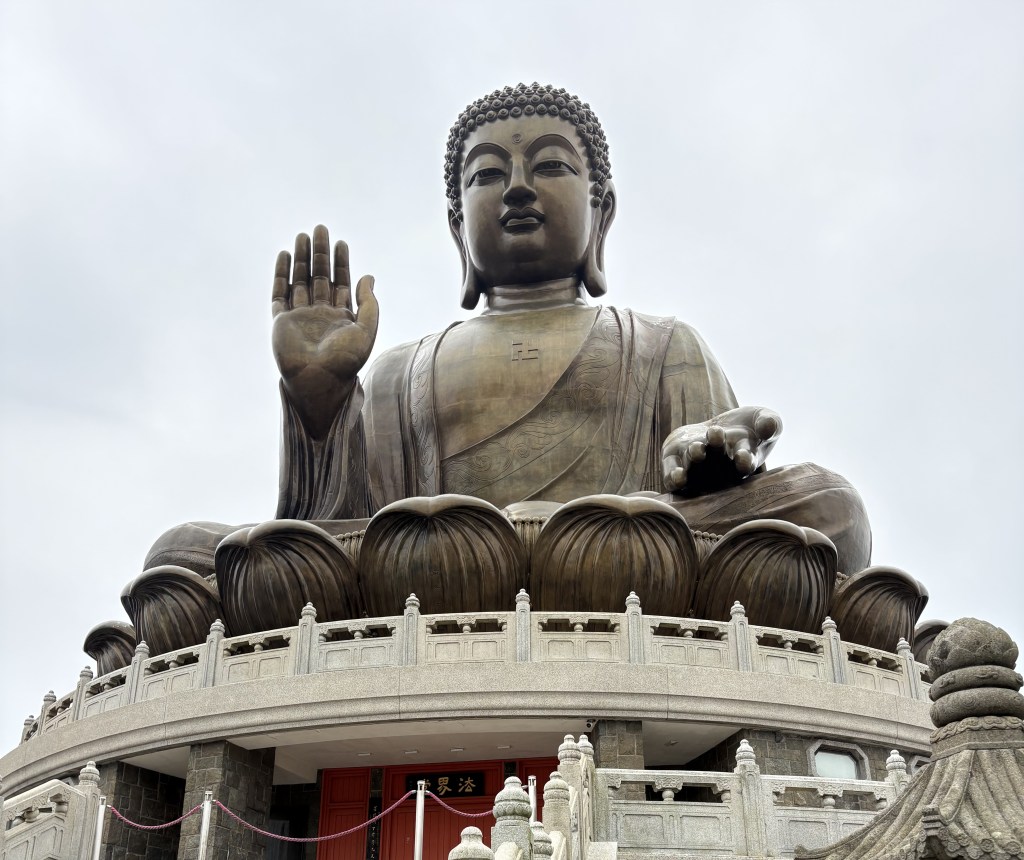
The design is inspired by the Altar of Heaven at Ding Cheng in China, and the base is specifically modelled after this Tian Tan (altar of heaven).The raised right hand is the variation the Abhaya mudra (fearlessness) and in Hong Kong specifically symbolises the removal of affliction and suffering.The left hand open with the palm facing upward(Varada Mudra) denotes blessings, generosity and prosperity. Together, the two hands represent the Buddha’s boundless compassion where the right hand removes your pain and affliction and the left hand gives you blessings. The base is a large lotus flower pedestal. The lotus grows out of muddy water and in Buddhist thinking it denotes purity and rising above the material things of life. This statue interestingly deviates from the Buddhist practice of facing the east as it faces northwards as if to suggest the blessings of the lord upon the city. For a detailed description of the symbolism and the evolution and construction of the statue visit the Po Lin monastery web site https://plm.org.hk/eng/home.php
The statue and the Po Lin monastery are located atop the mountain Mount Muk Yue Shan but now simply known as Ngong Ping village.Easily accesible by road from the base at Tung Chung or via a cable car. Getting to Tung Chung from Hong is fairly easy – We took the MTR Tung Chung line from Central to the Terminus at Tung Chung. If you choose to take a ferry reach the Mui Wo ferry Terminal and thence by bus to the top of the hill. The other option is the cable car from Tung Cung cable car station.Takes 25 minutes to cover the nearly 6 km jouirney to the Ngiong ping village.Apart from other technical details the unique engineering feature is that the cable car changes direction twice along the route at two angle stations – one at Chek Lap Kok and the other the Neil Shan station which is the highest point on the route – Passengers remain seated throughout an enjoy the view – positioned by the cable car company as the sky-land sea Lantau adventure.
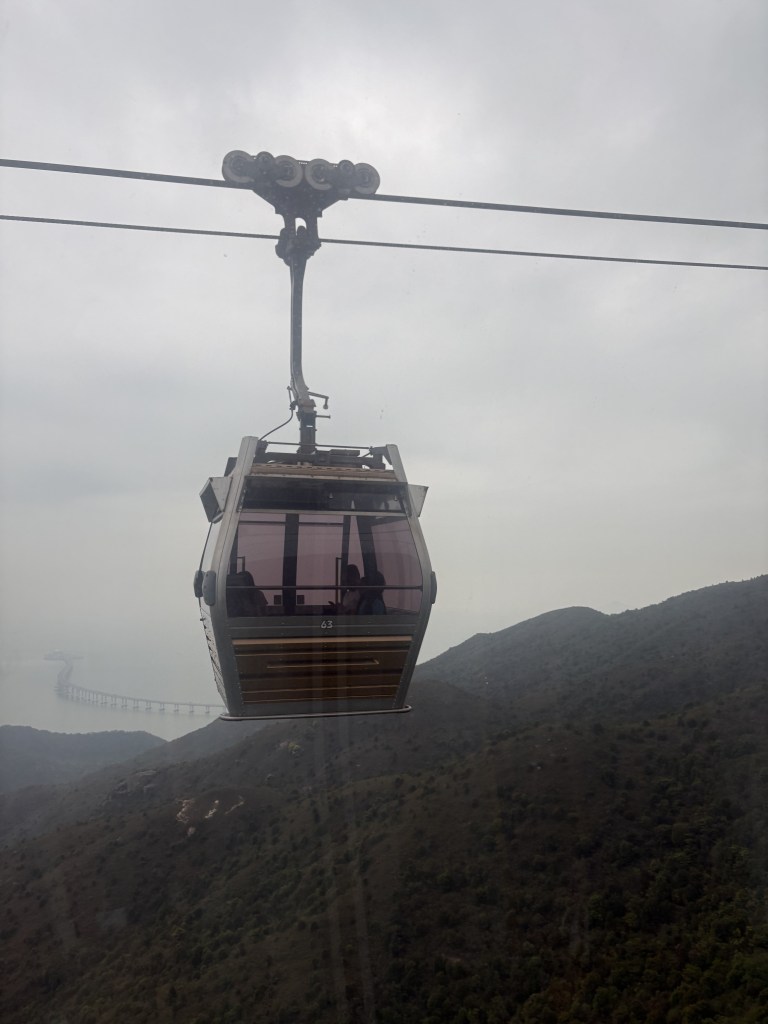
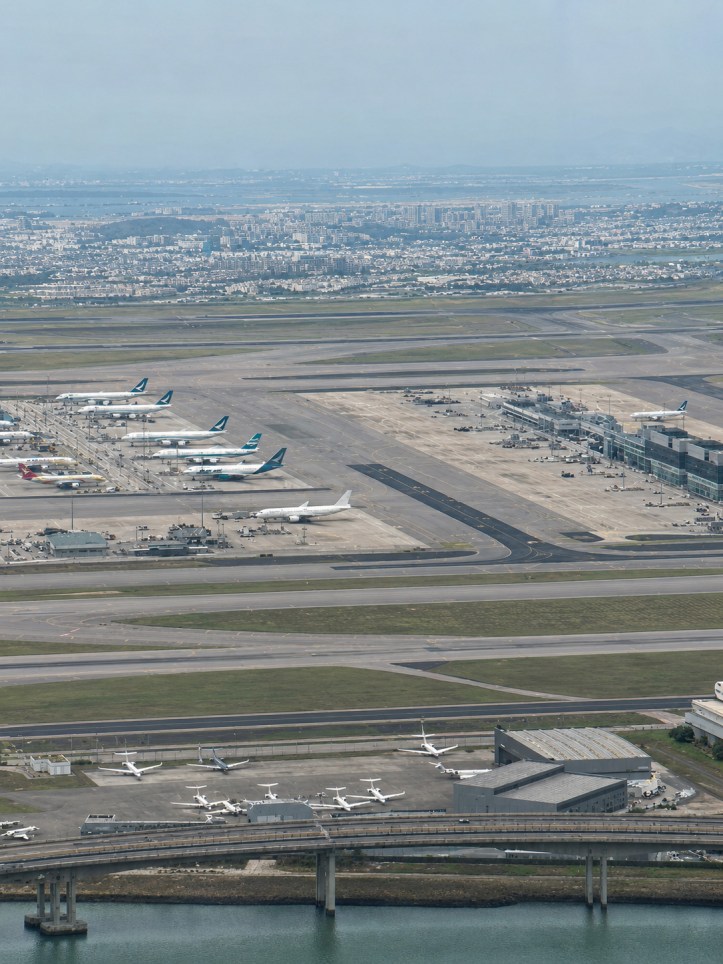
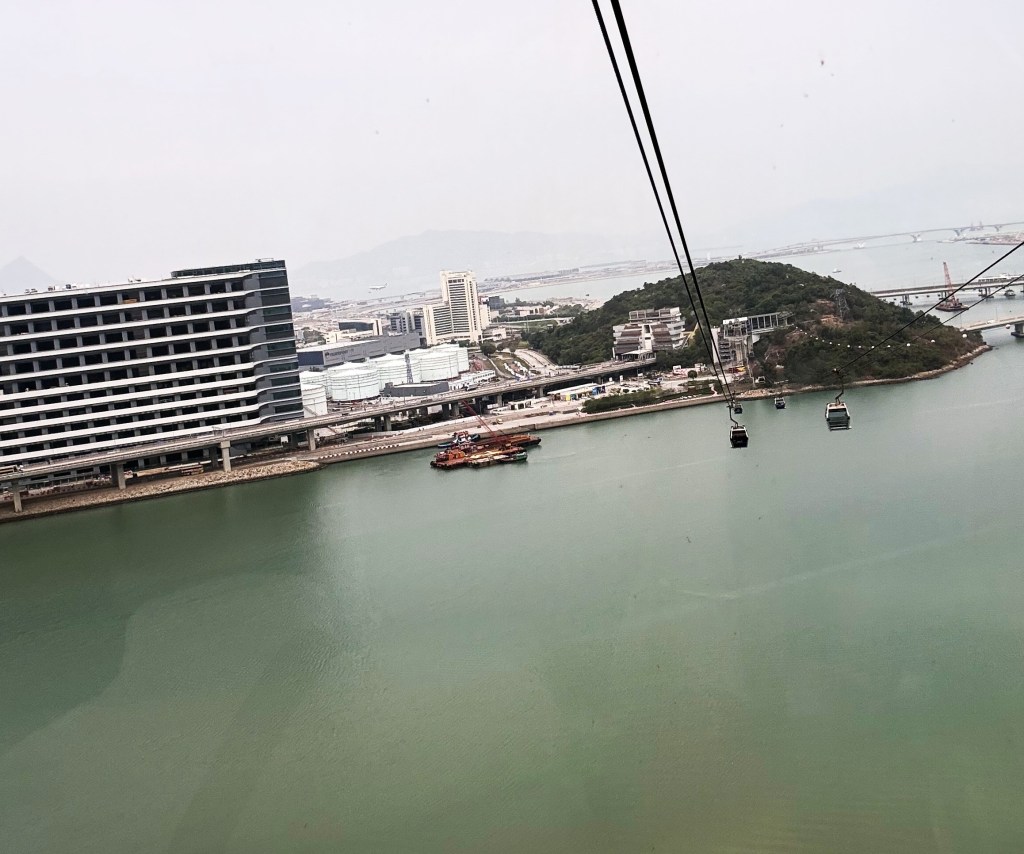
We got off at Tung Chung station and walked a short distance to the cable car station for our tickets.It took us almost an hour to buy the tickets due to the holiday crowds which I was told is a regular occurence. And so do buy your tickets in advance on – line after checking the schedules. Do also check out the weather for cloudy and hazy weather – Low visibility hampers the view and therefore the quality of photographs. Along the longish journey one can get some amazing views of the Tung Chung bay, the airport and the Lantau ridge. You can also get a view of the Hong Kong Zhuhai Macau bridge(HZMB) in the distance. From that height of a few hundred feet it seems almost like an aerial view from a helicopter. There are three types of cabins on the cableway – Standard, Crystal and Crystal plus with varying degrees of glass and of course the price. We chose the most expensive – Crystal plus not because of the extra view but to reduce wait time in the hot summer – rather than for the view – I thought they were all the same !!
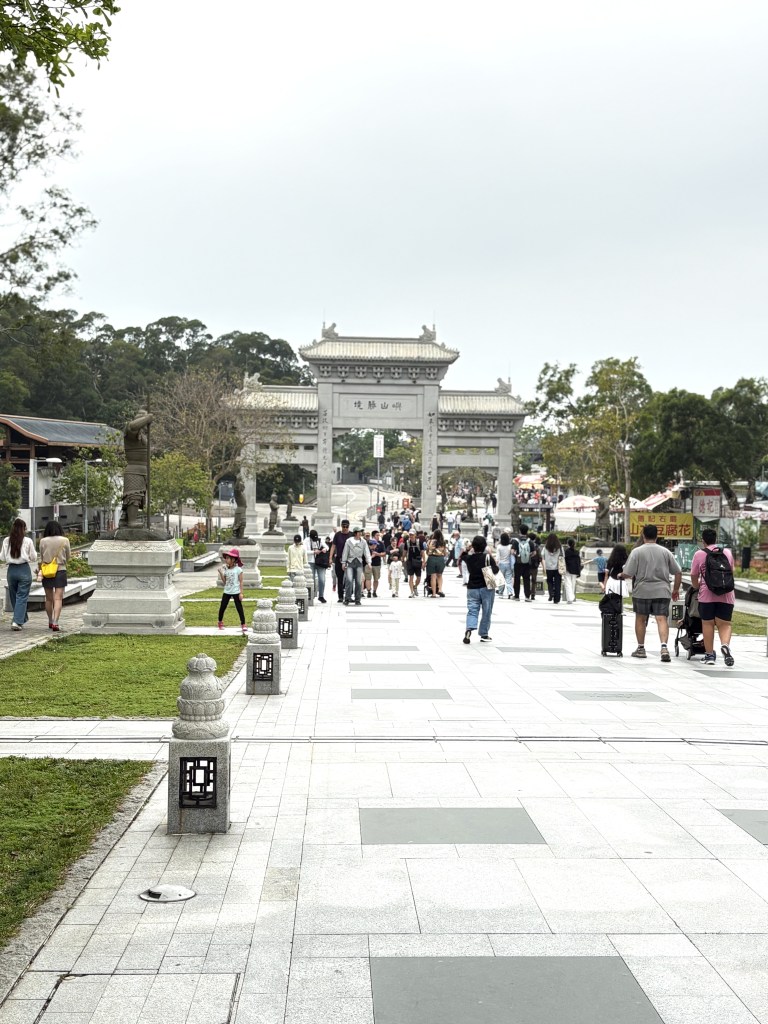
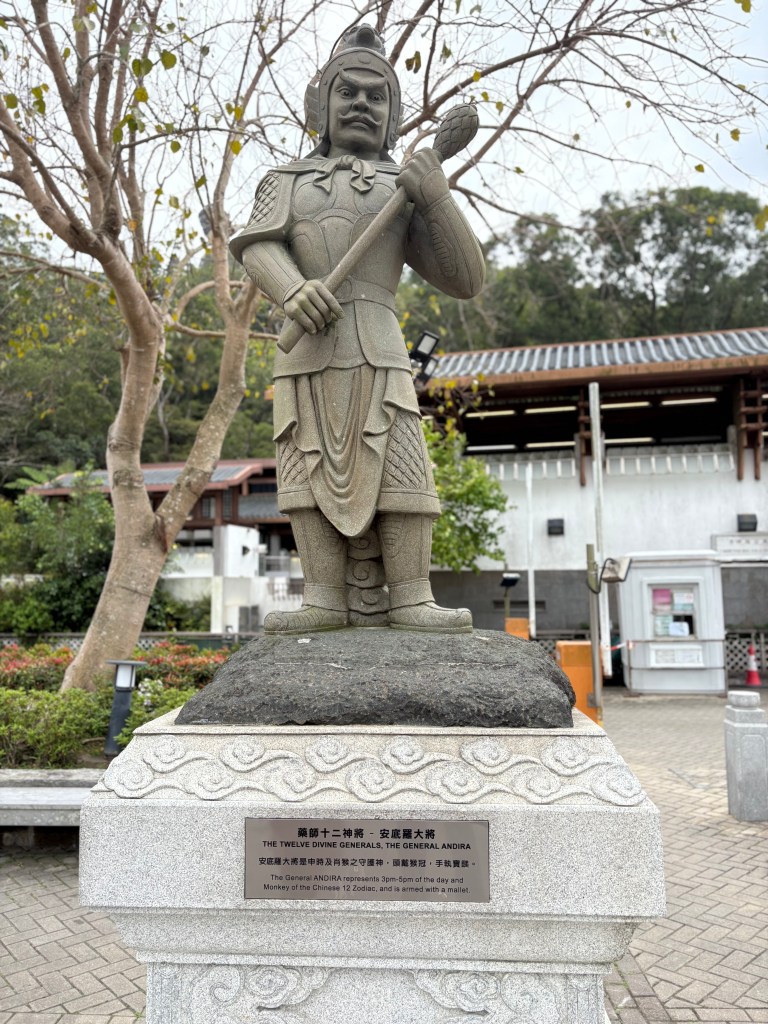
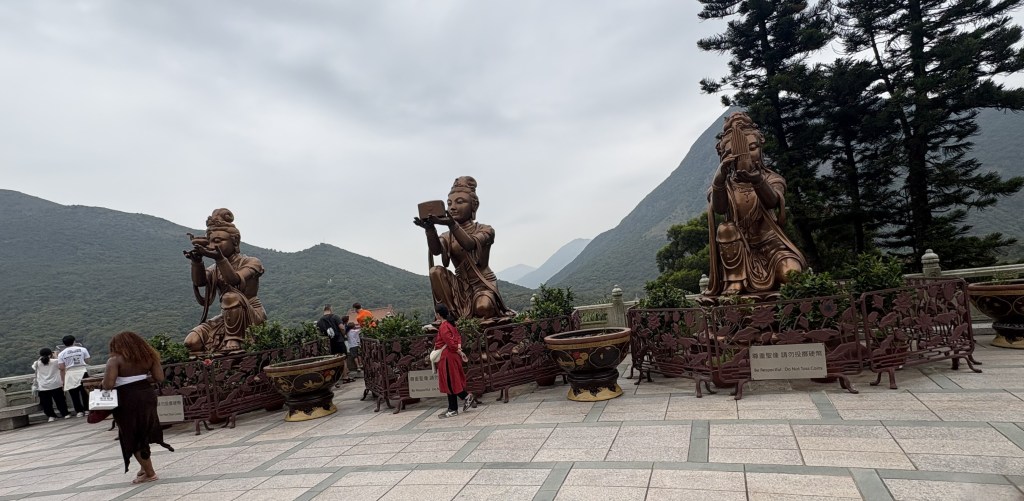
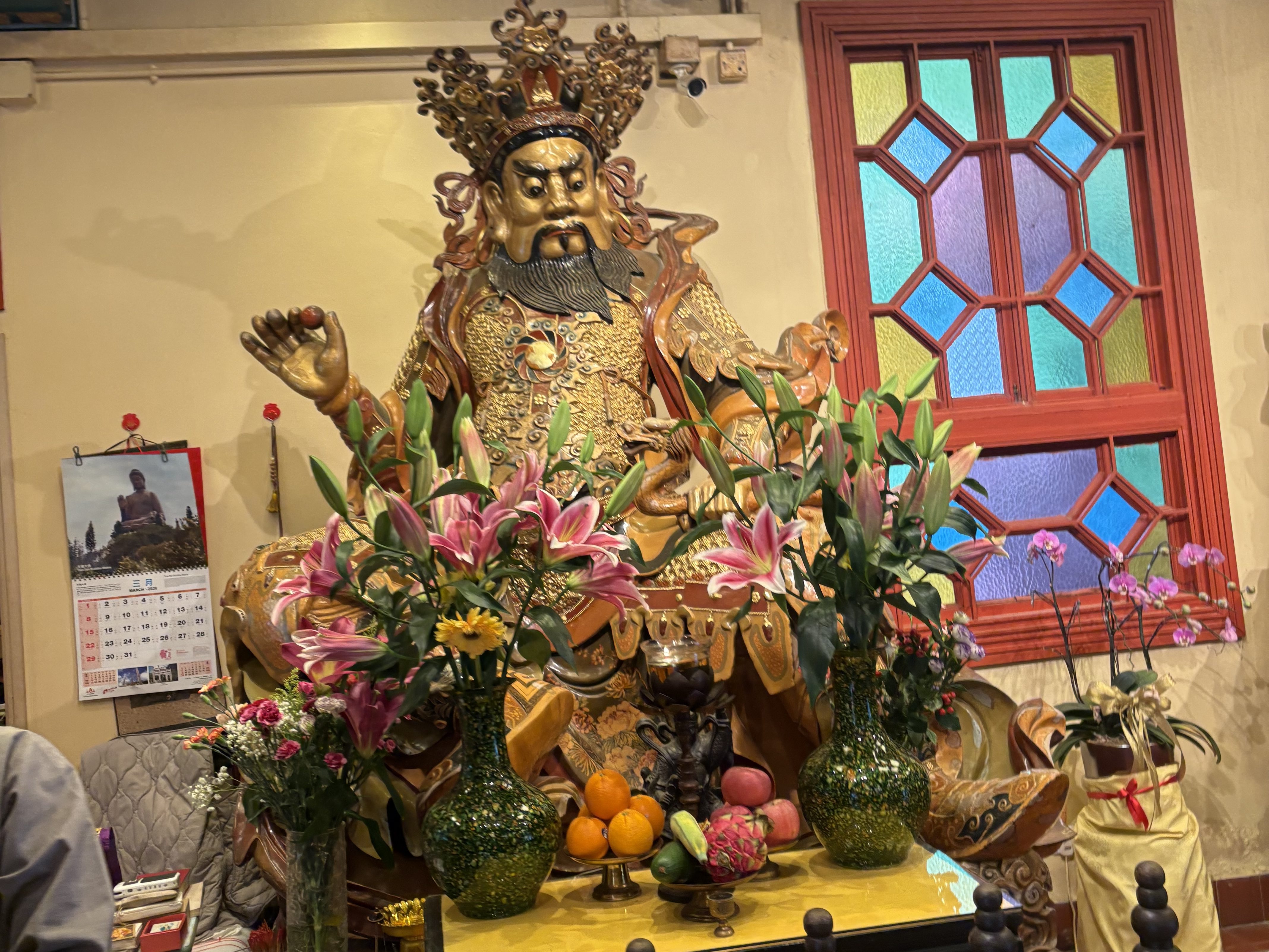
Once you get to the top you walk past the Ngong Ping village which is much like any tourist spot – a few restaurants, souvenir shops and local handicrafts. Past the village you walk into the fore court ( Ngong Piazza) leading to the footsteps of the main statue of the Tian Tan Buddha. Dont miss the 12 heavenly generals who guard the statue . Without delving into the philosophy of the medicine Buddha and the intriciate symbolism of each of these statues suffice to say that each of these statues guards the world for a two hour period and is associated with one animal of the Chinese Zodiac These are the twelve soldiers of the Medicine Buddhda and ward off sickness and evil .
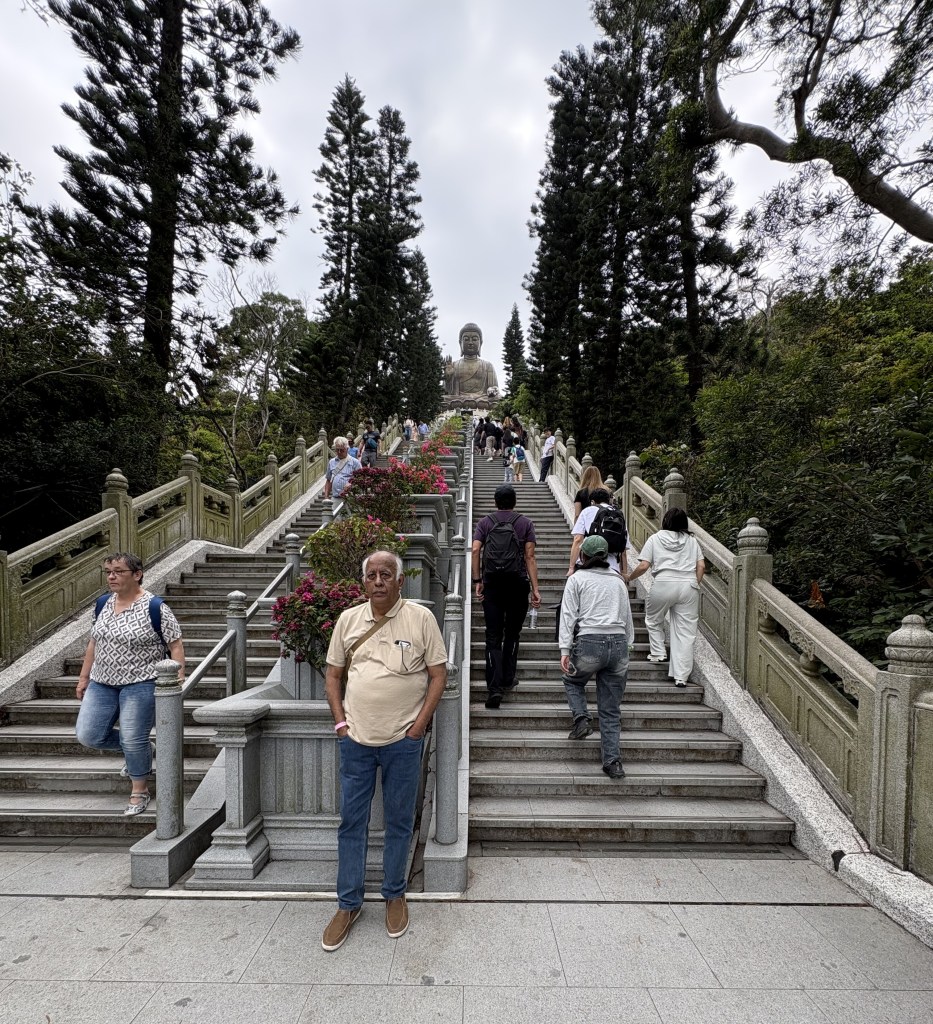
As we walk through the Piazza we get to the foot of the stairs leading to Tian tan Buddha .Standing at the foot of the stairs it did seem quite a daunting task but we mustered up the courage and slowly navigated our way to the top. Inside the base of the statue are two floors of museum housing Buddhist relics which we walked through.The statue is surrounded by the “six offerings of the devas”- symbolising offerings to the Lord. We did not get much of a view from the top of the hill due to the thick afternoon haze and we made our way down the stairs to the base and onto the adjacent Po Lin monastery .
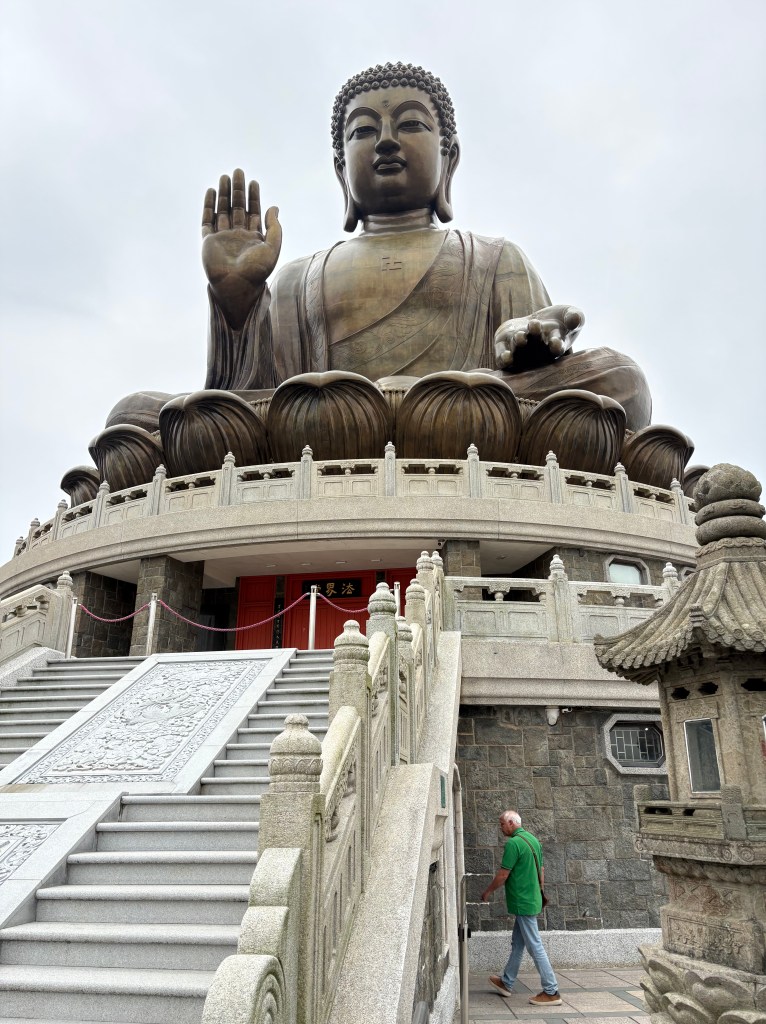
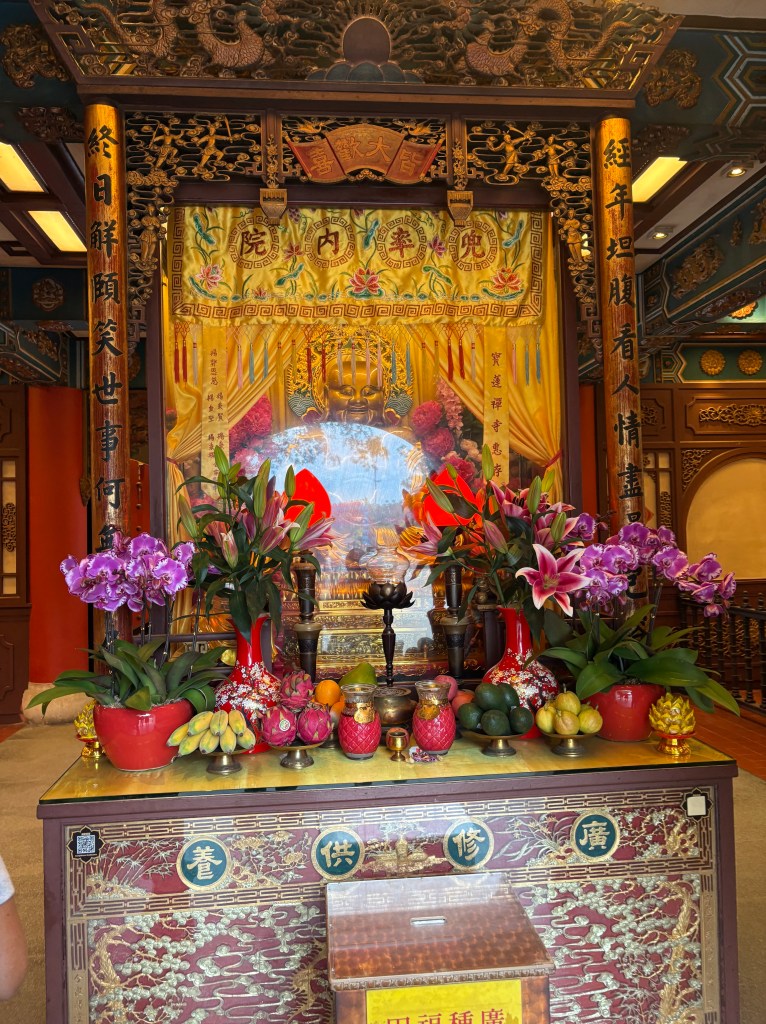
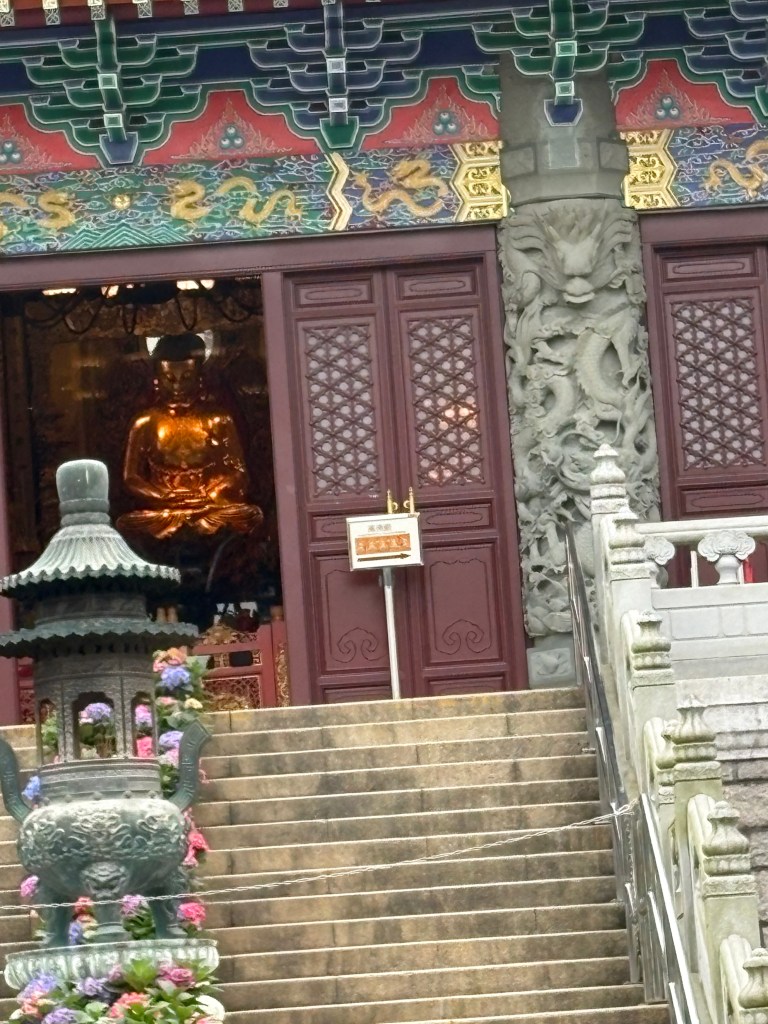
The Polin monastery is of fairly recent origin dating to the early 1900’s but gained prominence after the commissioning of the Tian Tin Statue. The large and spacious halls are richly adorned and present an aura of peace and comfort. Do stop by in the garden outside and the light the large incense sticks. A must visit are the stalls outside the monastery – you could find some interesting Budhist memorablia notably the wooden bangles. Also attached to the Monastery is a vegetarian restaurant- a rare delight in Hong Kong which serves an elaborate menu – It dispels the myth that it is difficult to curate an all vegetarian Chinese menu. From the monastery we traced our way back to the Piazza and onto the cable station for the return journey to Tung Chung.The crowds had eased and we had the whole car to ourselves but sadly the afternoon haze had thickened and poor visibility marred some great views. In hind sight I would suggest you take a bus down to the pier on the winding road through the Lantau ridge and thence a ferry back to the Central Pier.If you have the time do visit the Tai O fishing village and explore the many ferry routes leading back home!


[…] Tian Tan Buddha on Lantau Island […]
LikeLike