
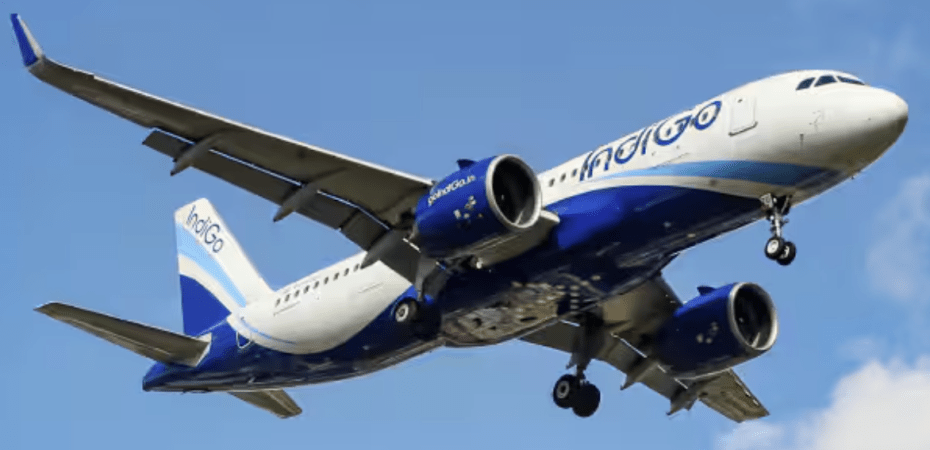
For nearly a week in early December, India’s largest airline, Indigo Airlines, faced major operational issues, leading to the cancellation of around 1500 flights daily without notice. This sudden disruption, which came in peak season affected thousands of passengers who found themselves stranded at airports. Normally operating 2000 to 2500 flights daily, this chaos caused airfare and cancellation charges to surge. While the airline’s management has stated that they are investigating the root causes of the issues; however, the jury is still out on the reason behind this turmoil, with speculation towards negligence, mischievous cost-cutting measures or simply an unfortunate series of simultaneous operational issues.
Malati and I planned to visit Mumbai on December 6th and booked the morning Indigo flight from Hyderabad. The airline’s website showed a 30-minute delay, which seemed minor amid the mass cancellations. Since our visit wasn’t urgent, I thought about canceling or postponing the trip. However, I was shocked to see that the cancellation charges were 24,000 INR on a fare of 29,000 INR! because the cancellation would be on my volition, regardless of the airline’s unpredictable schedule. To make matters worse, the other major airline in India, Air India, had one way fares soaring to around 24,000 INR as well, adding to the frustration.
Despite the high odds of flight cancellation, we decided to go to the airport and were okay with going home if the airline canceled the flight, as I wouldn’t have to pay the extortionist cancellation fee. We arrived at the airport on time and got ready for a long wait, even though it was now past the scheduled departure time. To entertain us, the airline changed the boarding gate for what seemed like a non-existent flight.
As per normal airline practice the departure time was pushed forward by 30 minutes at a time, leaving us waiting with little information. The gate agents had no updates on schedules, cancellations, or departures, and we couldn’t cancel our tickets. Passengers were left to occupy themselves; some irate, others resigned to their plight. One notable case involved a British Indian citizen who arrived in Hyderabad the day before, only to find his baggage lost by Indigo. He was supposed to catch our flight to connect to an Indigo flight to London from Mumbai. Meanwhile as what I consider proof of mischief all international flights left on time.
As we waited, we learned that an aircraft was available for our flight, but there were no pilots. When they finally found pilots, they still needed to locate the crew. Meanwhile, more crew members arrived, all waiting to board for their duties at other stations. Each crew member’s arrival was met with applause from the now resigned audience, only to be told they were just another passenger.
The next hours were spent waiting for the crew till we were told that the last of the crew assigned to our flight had left from home a short while ago! Knowing the traffic of Hyderabad it meant at least another hour. By now it was lunch time and the airline very kindly offered us a bottle of water for which we are eternally grateful! My son who was stranded in Patna airport told me that the passengers were offered lunch and the discussion with the staff veered around what could possibly the menu for dinner – While this may seem apocryphal, it brings out the nature and culture of the Indian passenger – There were hardly any unruly scenes and in spite of clueless freshly minted gate agents no one bothered them. What surprised me was that no senior official of the airline showed up during our long and interminable wait.
And finally after what seemed like an eternity, the last of the crew members arrived from her home we were boarded in a process INDIGO calls “sequential boarding”. Boarding in a systematic sequence to avoid crowding at the gates and the aircraft or so they believe. The passengers join multiple lines all of which converge on the gate leading to boarding in a haphazard sequence. Thus defeating the purpose of the whole exercise . The airline does’nt care and the passengers including frequent fliers have yet to understand that the gate will not close until the last one has boarded. A cultural issue of Indians who have grown up in an era of shortages and of the Indian service providers who believe the passengers owe them a debt of gratitude for allowing them to board an aircraft. This reminds me of a time many years ago when a now defunct low cost airline understood this customer behaviour and therefore did not assign seats – Plastic reusable boarding passes with no seat numbers ensured that the flights were boarded in minutes – never mind the scramble for an empty seat – Who cares? Definitely not the airline .
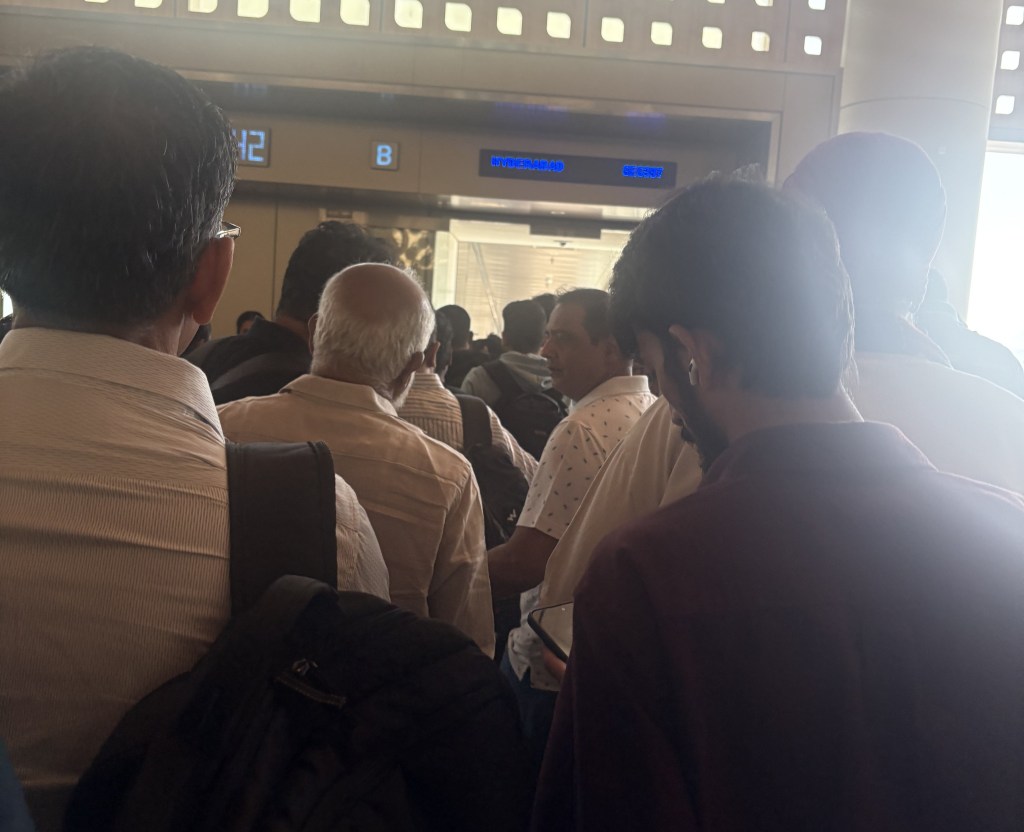
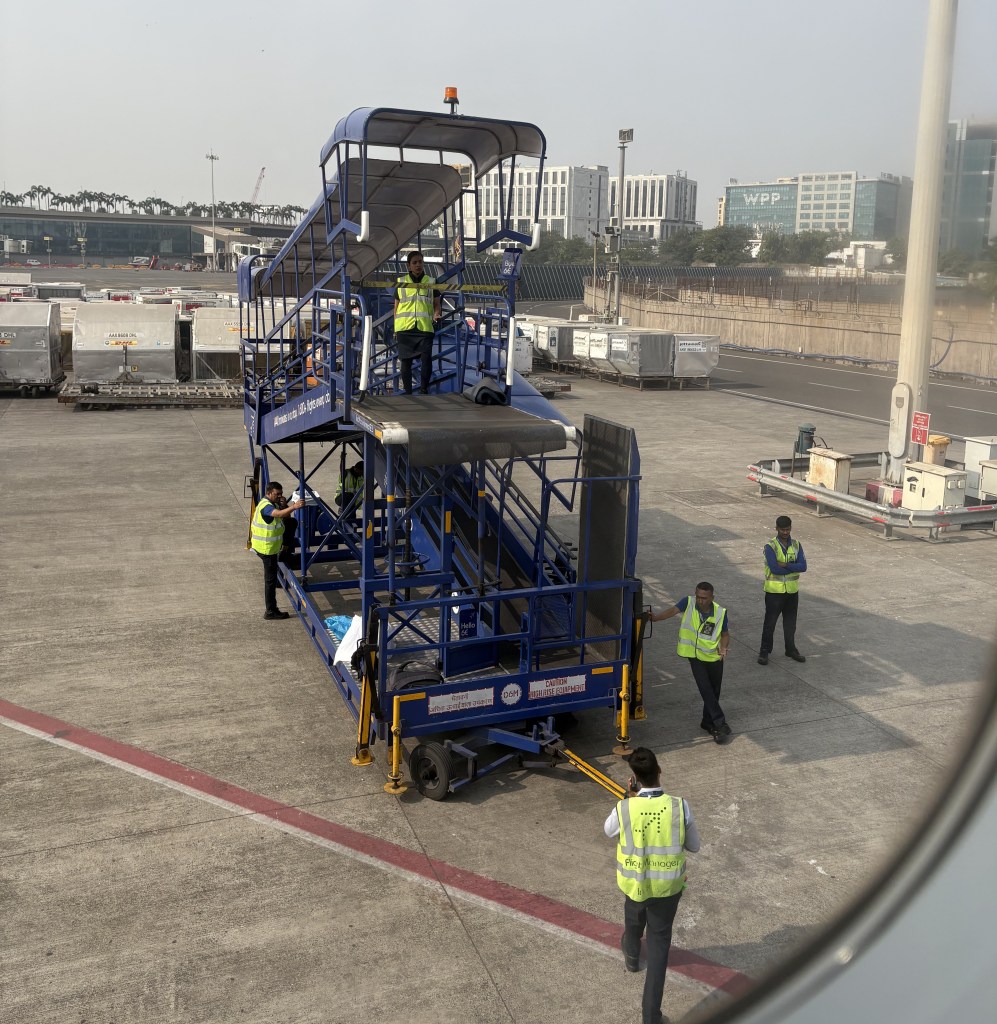
And finally the aircraft taxied out of the airport and soon reached Mumbai without any further incidents. Aah! I thought that was the end of our journey – never mind that the aircraft docked at a far off bay and not at one of the many vacant aerobridges, This is standard practice of this airline to save money on aerobridge charges – And that is the irony of India – it is more cost effective to hire large manpower to manage the process rather than pay for the aero bridge. And then began yet another wait for the step ladder and the buses to take us to the terminal – Were informed that step ladders and buses were in short supply – Strange I thought given that hundreds of flights were cancelled.
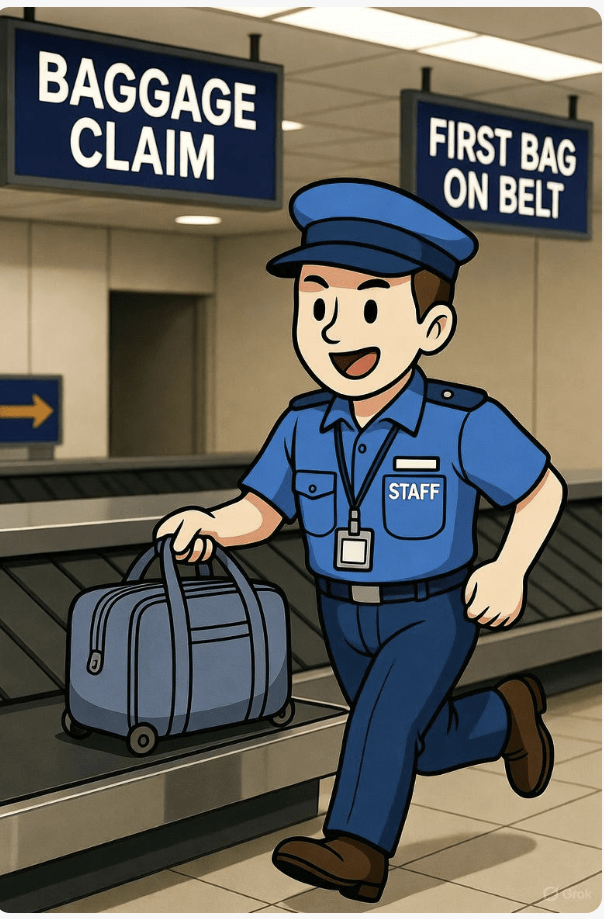
And finally we were at the baggage belt – It beats me as to why the belt number is always a closely guarded secret in many Indian airports and once discovered by the passengers suddenly is changed – Yet another practice is to announce the arrival of the first bag on the belt and then nothing happens for long – It would seem that a staff member is assigned the role to Unload one bag and run to the belt and announce victory – “First bag on belt” SLA adhered to !! – Similarly Last bag on belt displayed doesn’t mean the end of the baggage run.
And so after a delay of nearly five hours we got our bags and headed home -Should I complain and carp about a delayed flight or should I be grateful that my mission to reach Mumbai has been successfully accomplished – And should I say “never again Indigo” ?- I would be spiting myself if I carried this grudge since Indigo has a domestic market share of 65 % .
Afterscript – We returned home a week later and our we were delighted that our flight was delayed by only an hour – After the last journey we had recalibrated our expectations and will now remain so not withstanding that this an age of instant gratification – Indigo has not yet come up with a satisfactory explanation though details of its negligence to comply to the new government rules of Flight duty limitations are emerging – As passengers we will soon forget the experience and get back to our “Chalta hai” ways – both the passengers and the airline .
 Travel with Ramanand
Reading ramanands travails, i felt that i waw also going to mumbai with hhrm. Happy to have only heardcand not experienced this great expeditiin.
LikeLike