

A “Wat: translates to a temple or monastery in Thailand. Laos and Cambodia .
Chiang Mai has around 300 temples within the town and a few more in the mountains around. In addition to the nearby town of Chiang Rai also renowned for its temples. We planned to limit our temple visits to three or four “prominent” ones. The challenge was to decide what was prominent and how to create a shortlist. Did some research on the net and tried to create selection framework. Malati “as always” had a better idea and we ended up consulting the hotel, a taxi driver and a man on the street and created a shortlist. Which I must say in hindsight was a great success! And so it was Wat Phra Sing because it was the closest to our hotel, Wat Sree Suphan because it was made of silver, Wat Chai Mongkhol alongside the river Ping and Wat Chedi Luang because it was different from the other temples.
The first temple that we visited was the Wat Phra Sing located in the old city alongside the Sunday night market. The Geo tagging on the phone showed the name of the temple as Wat Phra Sing Woramahavihan. An elderly Thai gentleman explained to us that temples are classified as Ratcha – royal or regal, Wara meaning superior, maha meaning large and Vihan as the main hall housing the image of Lord Buddha. I also learnt that the royals of Thailand had created a classification of temples and that there was only one Class 1 Temple in Chiang Mai – The Wat Phra Sing Woramavihan and one class two temple Wat Doi Suthep and Wat Chedi Luang a class three temple. This temple is different from the others in that it was originally built to house the ashes of the king in 1345. Subsequently the statue of Buddha was added – This statue is of PHRA SINGH Buddha and is one of the three such in Thailand. We spent a lot of time in the main vihara understanding the involvement of the Royals and the messages of the lord Buddha – All thanks to Google Translate which i must say did quite a good job !!


Our next port of call was the Silver temple or the Wat Sri Suphan built circa 1500 and rebuilt and renovated the years .The temple is covered with “silver” and the silvery grey is due to the additives of nickel an other compounds. A sign showing the sequence of visiting the different buildings in the compound was helpful. Of particular interest to us was the statue of Lord Ganesha the Hindu Elephant God, which I believe is a common feature of many Buddhist temples in Thailand. It also substantiates the theory of the Indian heritage of Buddhism and the links with Thailand. Here again with the help of Google and a tourist guide we did go through the messages of the lord Buddha and other historical facts.


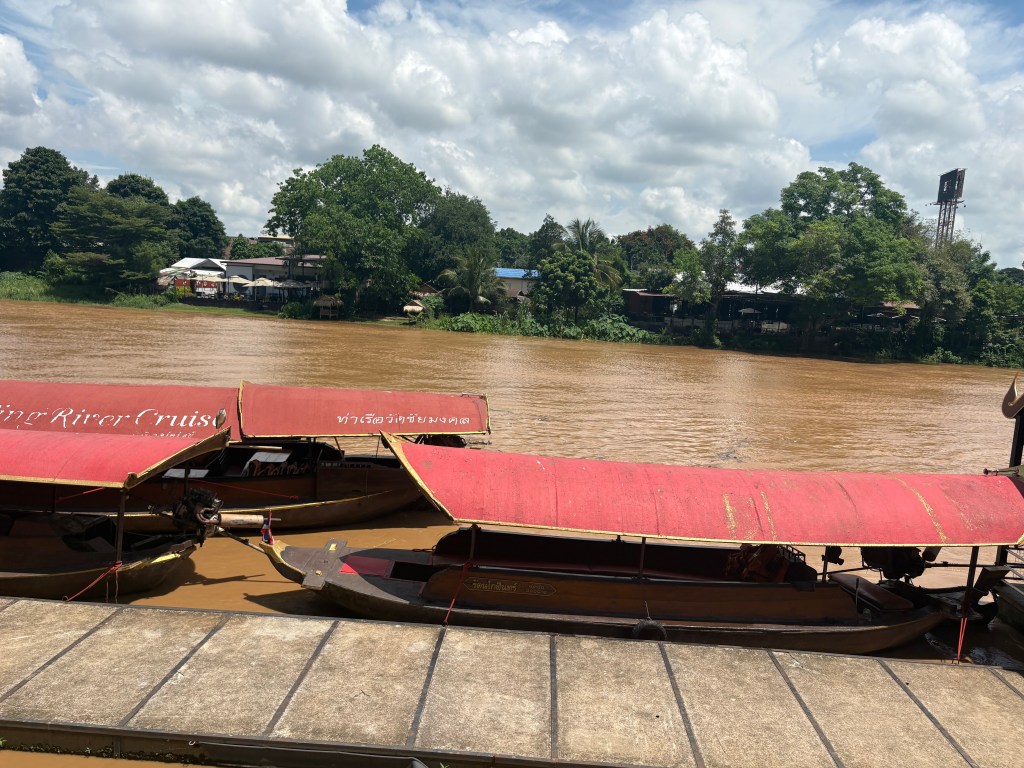
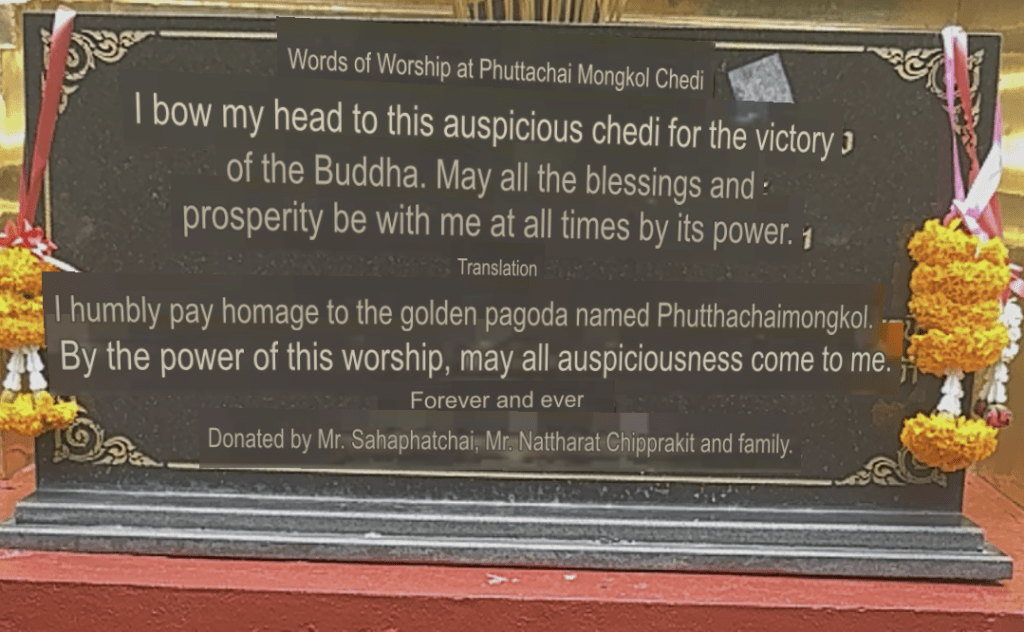
The last temple we visited in Chiang Mai was the Wat Chai MongKhol located beautifully alongside the Ping River. While the river was broad and fast flowing the muddy colour detracted from its magnificence . This temple is one of the newer temples and dates its origin to the late 1800s . The main vihara or the ordination hall was adorned with paintings and murals. The priests were also amicable and did deliver us their blessings.



While temples and pagodas are always on my Thailand must Visit list I have appreciated very little beyond beyond the architectural beauty and maybe some history. Light some incense sticks and make an offering to the temple. This time I attempted to do better. Sadly tourist guides were not of great help beyond WIKIPEDIA. We took the help of Google translate and the local monks to understand the import of the murals, statues and messages which made our visit a bit more fruitful than before. Beyond that the temple visits were just one more check mark on the tourist itinerary – And we only went to three of the hundreds in Chiang Mai. After our visit to these three temples our next stop was the Wat Doi Suthep an hour’s drive out of Chiang Mai and listed as a definite must- visit and not to miss on any Chiang Mai itinerary.


[…] The “Wats” of Chiang Mai […]
LikeLike
Nice and elaborate write up on each place and temple with description gives an idea to plan if someone wants to visit
thanks Ramanand
LikeLike