
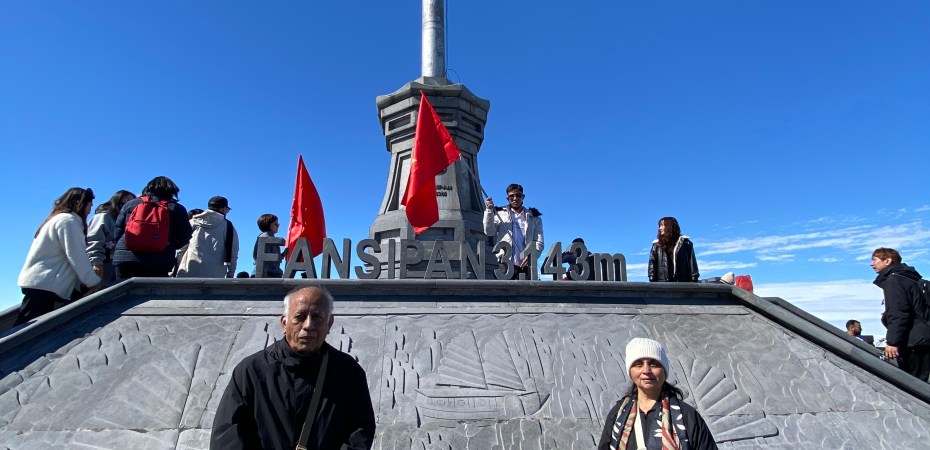
The northern highlands in Vietnam bordering China are known for their rugged scenic mountainous beauty. This area has been inhabited for many years by local ethnic tribes but came into prominence in the early 1900s when the small town of Sa Pa turned into a mountain getaway for the French. Many villas were built here – Most of which were destroyed during the Vietnamese War of Resistance (1945-1954). It was only in the 1990s that tourism was permitted and now Sapa has become a very popular and bustling tourist town. Sa Pa serves as the base for adventure tourism, trekking, and visiting Phan Xi Pang (Fansipan), the highest peak in the region at 3413 m above sea level

The most preferred way to get to Sa Pa from Hanoi is a sleeper bus (called limousines!) or by Night Train to Lao Cai and bus thereafter. We chose a day time private taxi drive to Lao Cai on the expressway which runs mostly along the Red River. The drive was scenic and pleasurable and got us to Sa Pa in time for lunch . We spent the rest of the day exploring Sa Pa town. There isn’t much to see in Sa Pa town except to sample Vietnamese food or trawl the markets looking for trinkets, handicrafts, trekking gear or just hanging around the lake. A visit to the nearby Cat cat village offers a view of the Vietnamese life.

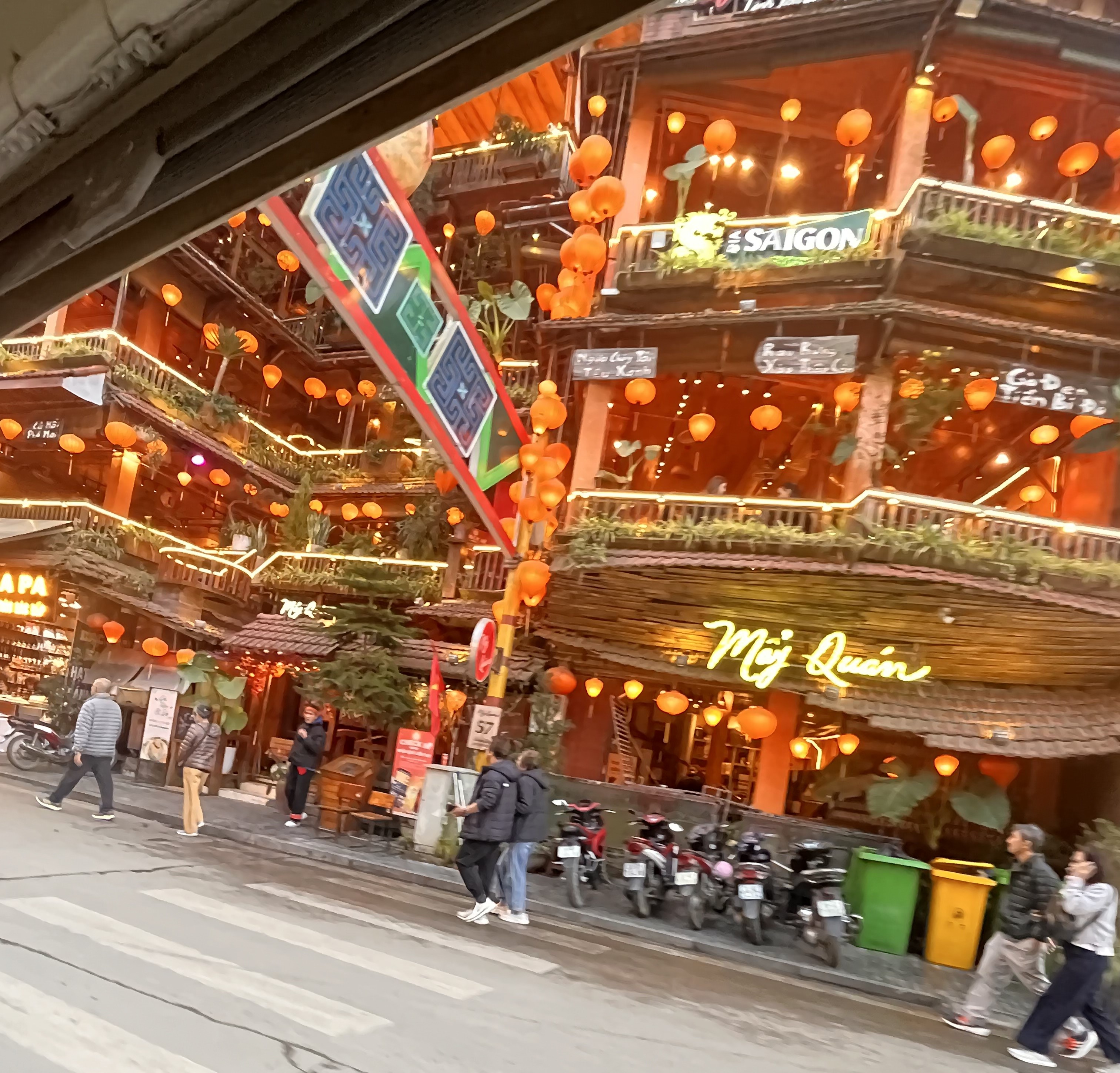


Apart from a drive around the town our plan included only a visit to Phan Xi Pang. The weather in Sa Pa was cold and the mountain view was blocked through the early part of the day. We took a chance with the weather and got lucky. By the time we got to Fansipan the skies were cleared up and sunny! The route to Fansipan from Sa Pa station is in three stages. These stages do appear confusing and are often referred to more than one name . Hence a bit in detail. The first leg of the journey is by a tramcar also called funicular or monorail from Sa Pa station in Sun Plaza – A short 5 min journey through Sa Pa town to Moung Hoa station which is located within the Sunworld complex.

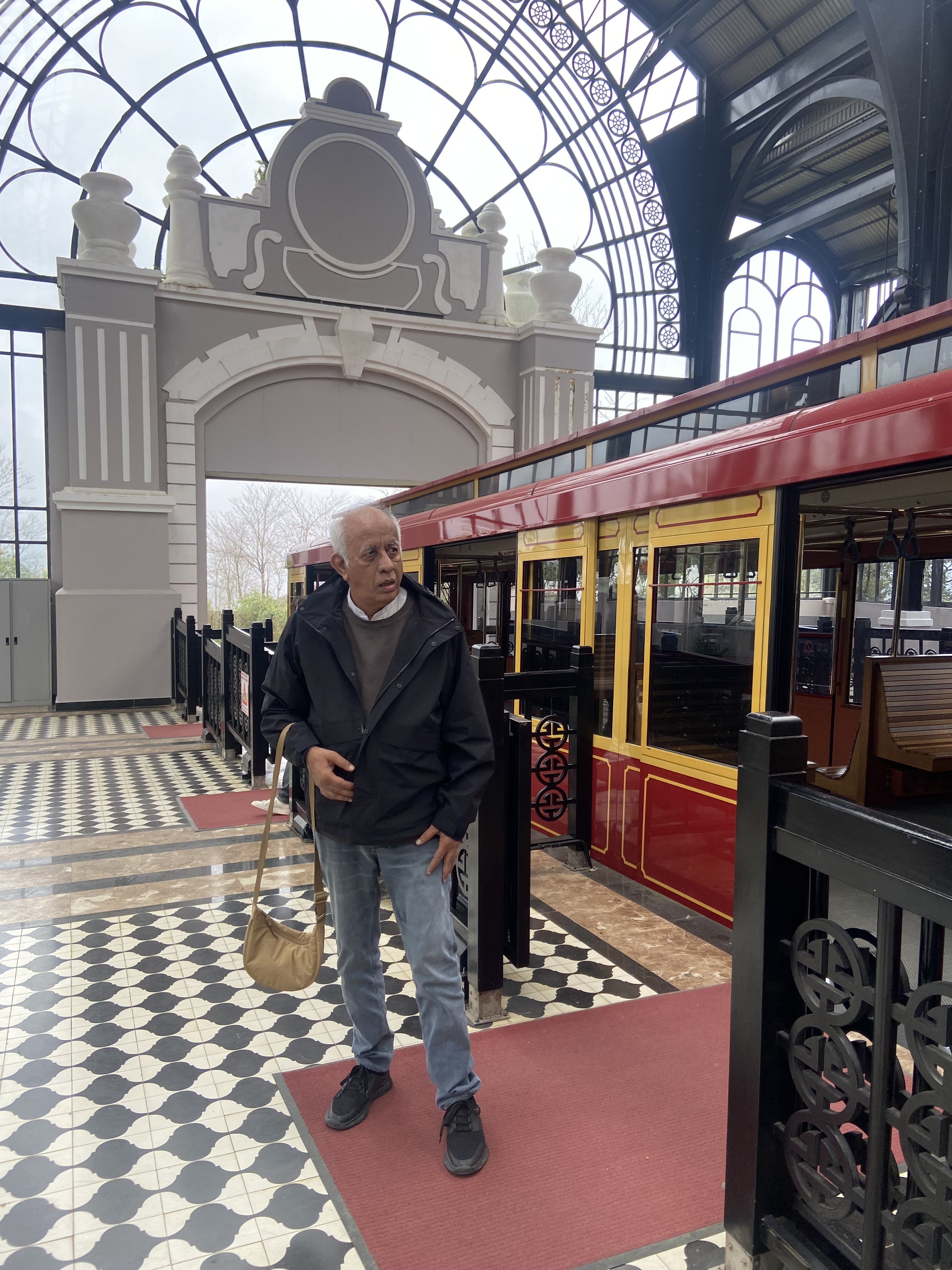

The next stage involves a walk through very well laid out gardens to the cable car starting station. The walk takes you through the garden, a pagoda, a clock tower and other structures till you enter the station complex with the attendant shopping and eating places. Do stop by at the map and plan your trip for the rest of the Sun world complex.
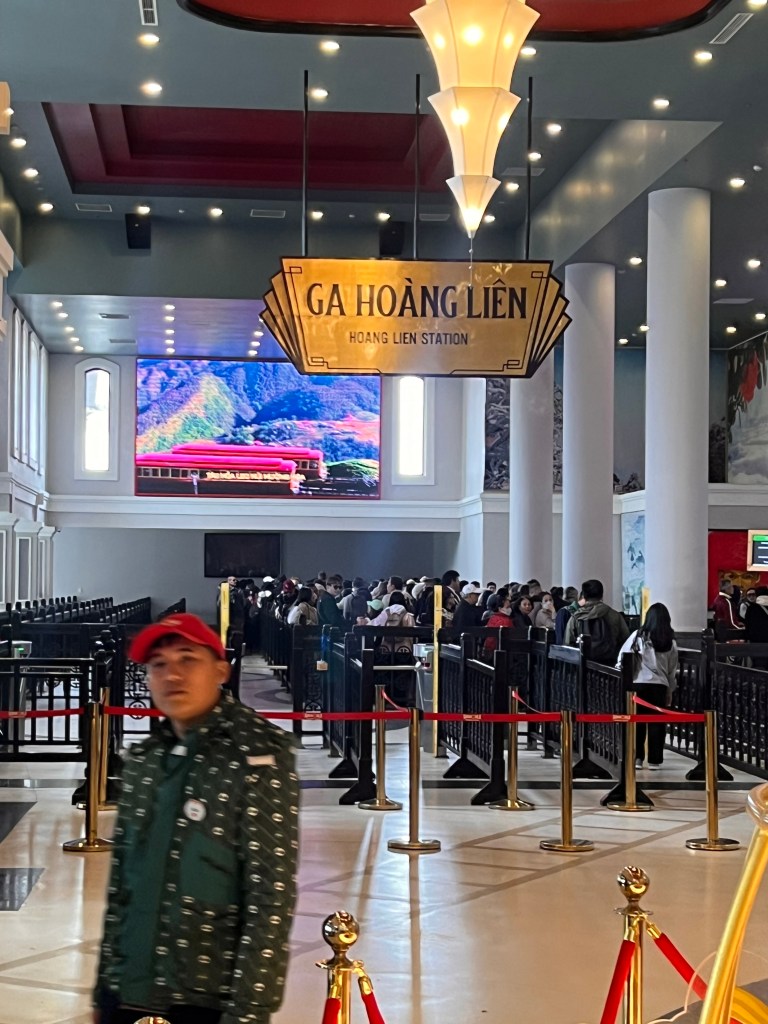
This cable car starting station is referred to as Ga Hoang Lien or Ga Cap Treo ( Ga =station and Cap treo = cable car). Avoid weekends as the place gets very crowded. Tourists complain that the wait period at the various stages of the Journey takes longer than the sight seeing. The cable car is safe and comfortable and the entire journey takes about 15 mins. Sun World claims that this cable way has featured in the Guinness book of world record for its design and construction parameters. During the cable car journey we were engulfed in clouds most of the time with visibility at zero. I was uncomfortable with this state but soon enough as we neared the end of the cable way the skies suddenly cleared and it was sunshine for the rest of our trip to the top of Fansipan .


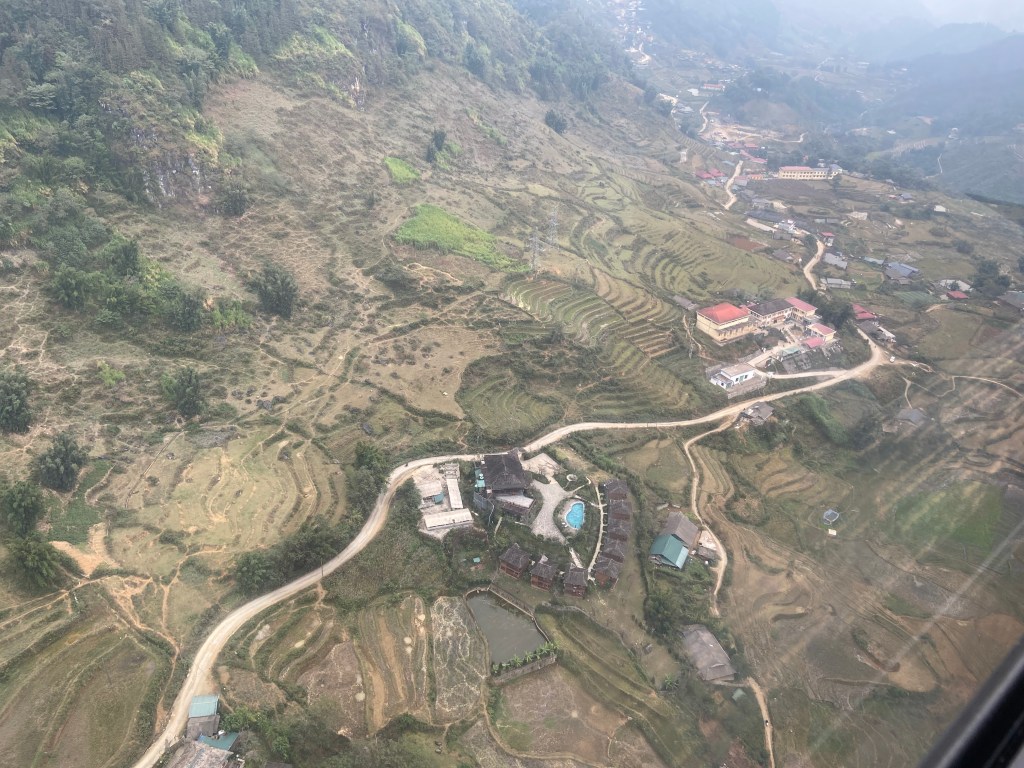
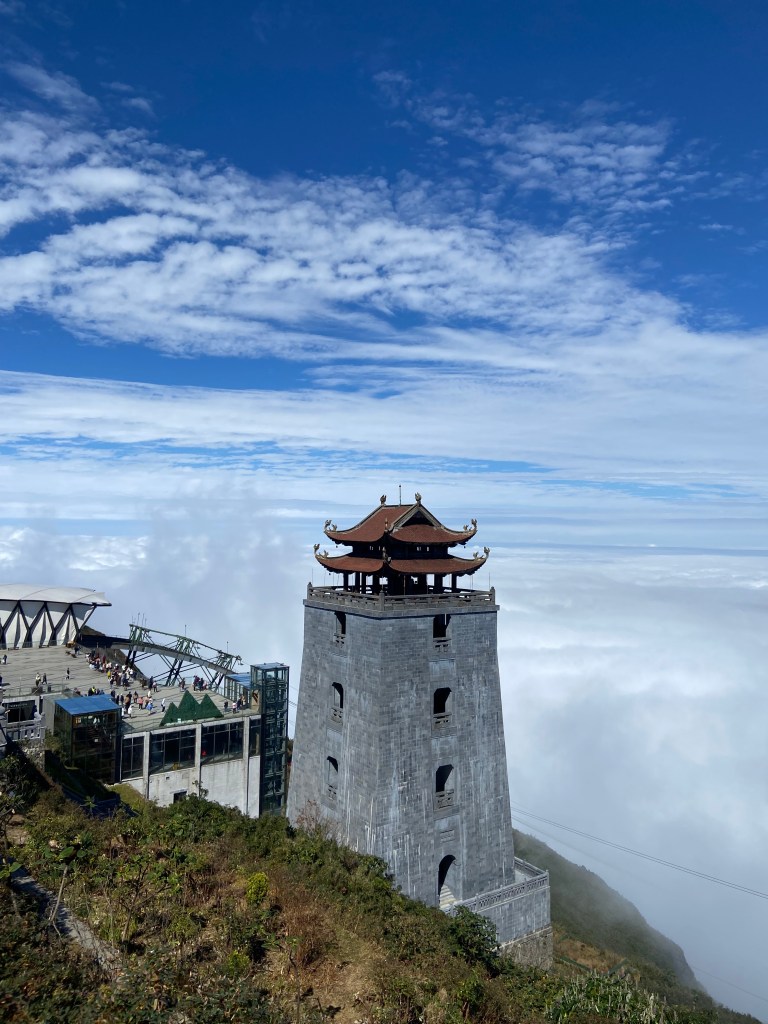
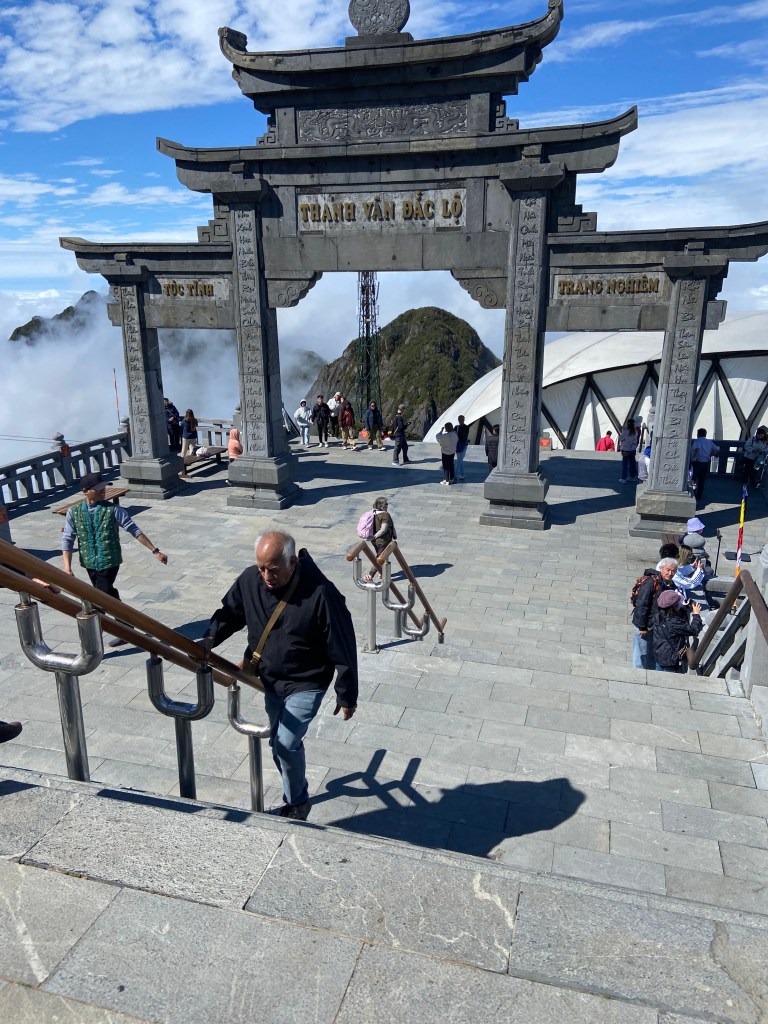
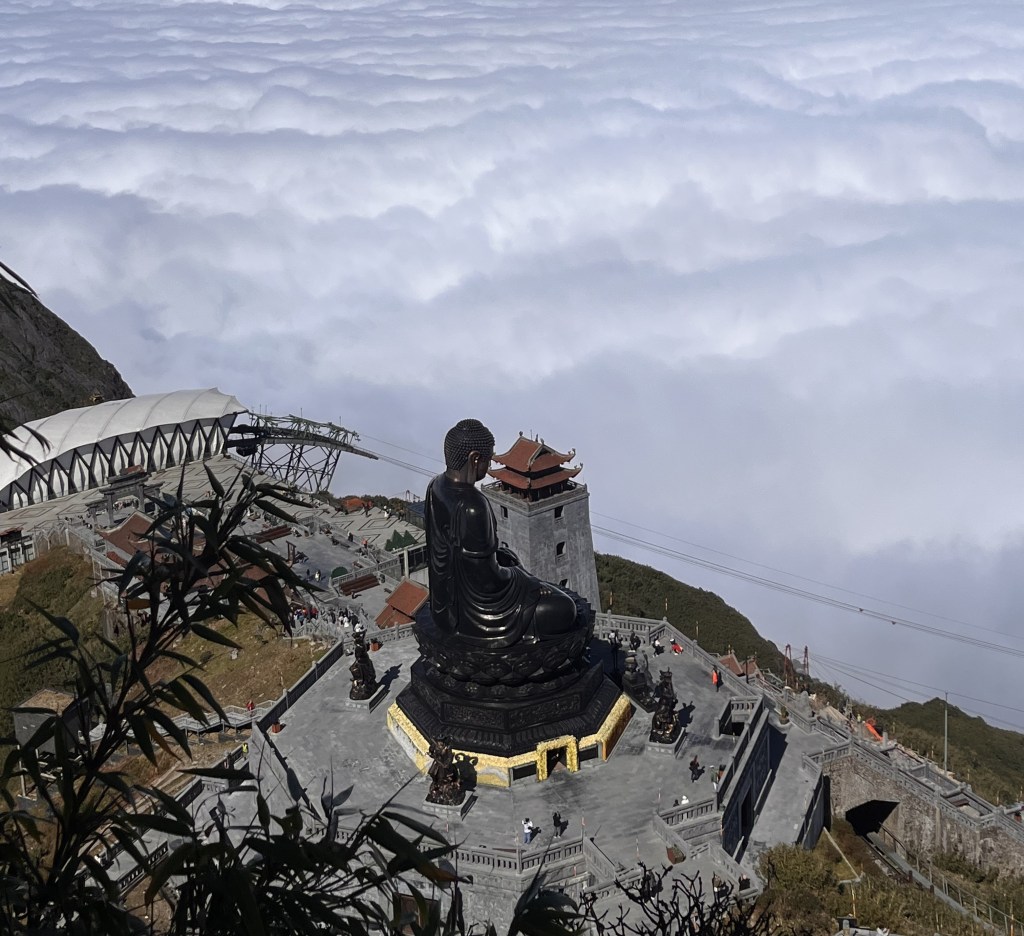
Once you get to the Fansipan cable station (Ga Fansipan or Ga cap treo) you enter a large open space and you can look upwards to the top. The whole complex can be divided in to three levels – the first which includes the watch tower and the pagoda. The second level where the great Buddha statue and the Nine Level waterfall are located and a third level which i would call the peak level. Steep steps make the walk up each level difficult and there are adequate warning signs but I would suggest you best avoid if you have physical mobility issues even of the lesser kind ! Look at the photograph of the great Buddha below to get a perspective of the steep steps. Also don’t miss the funicular rail in the picture On its way to the top of Fansipan.
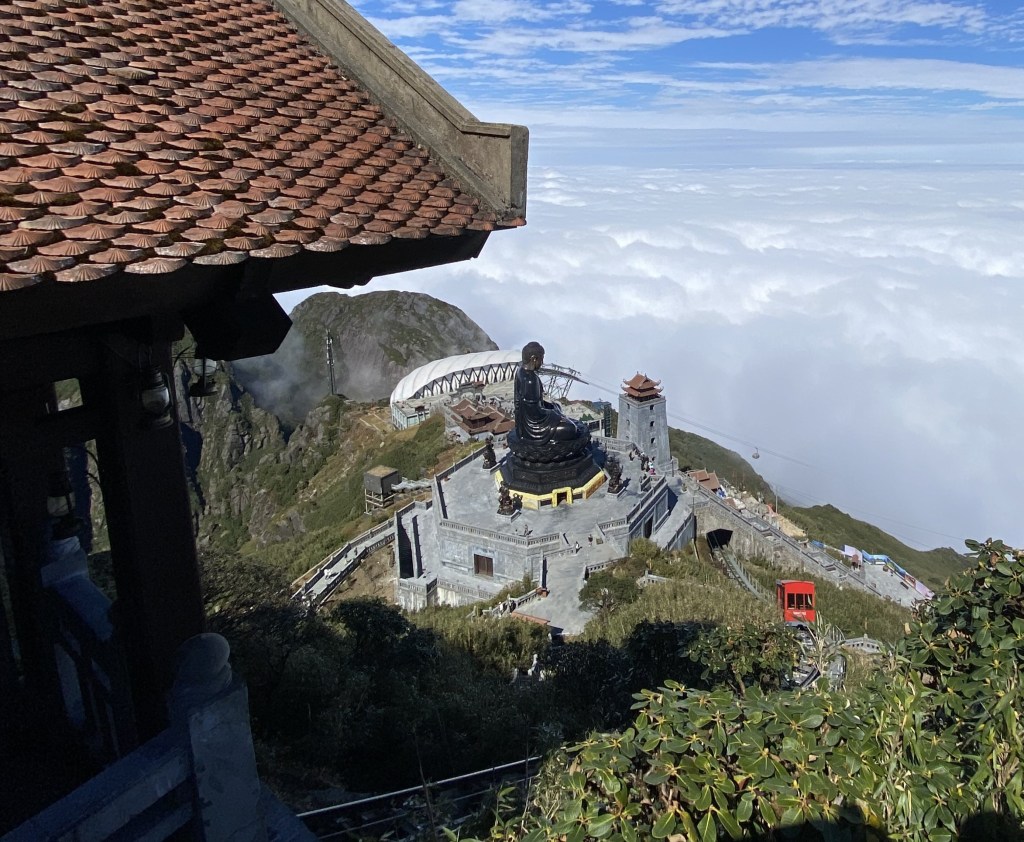
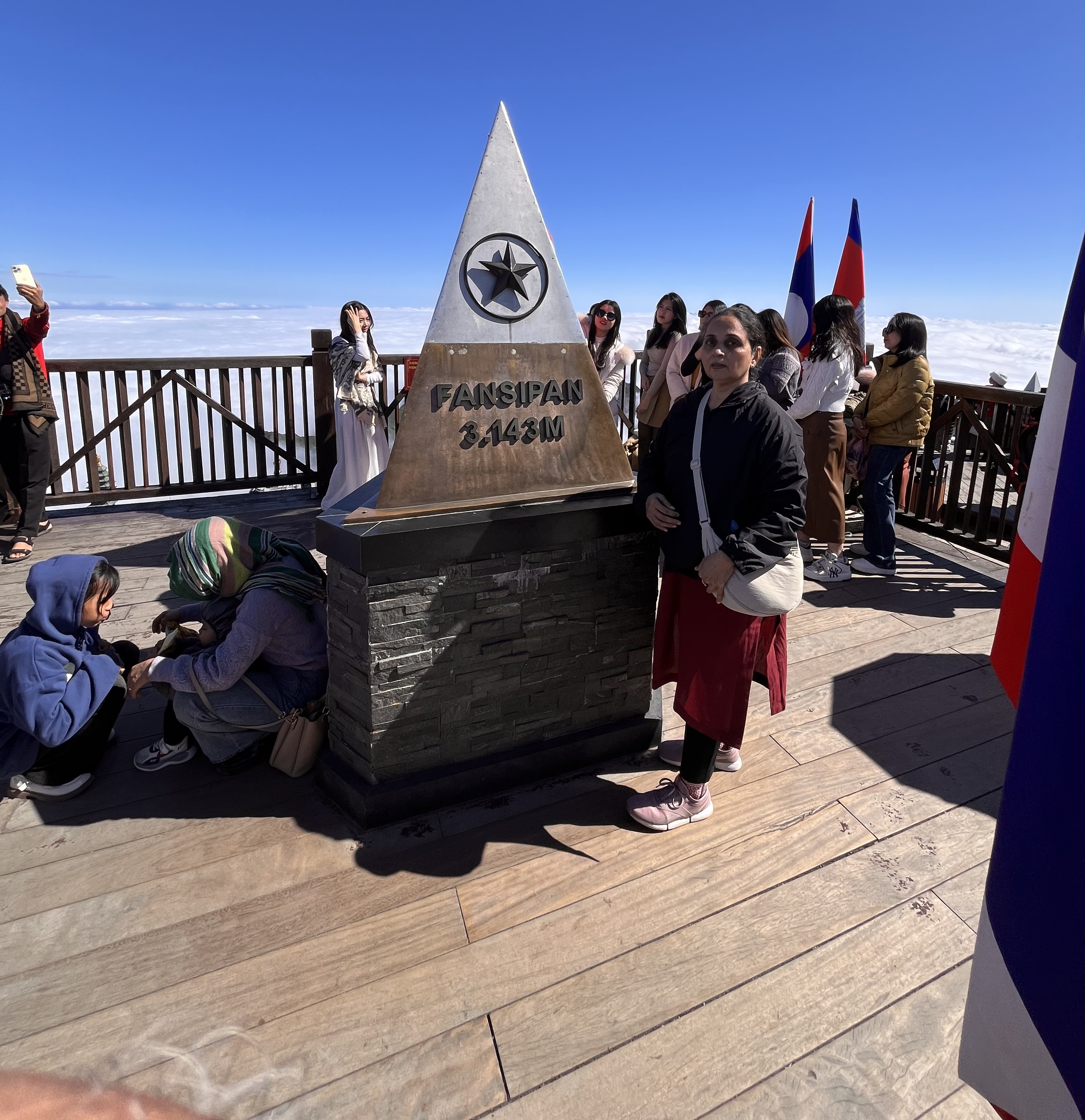
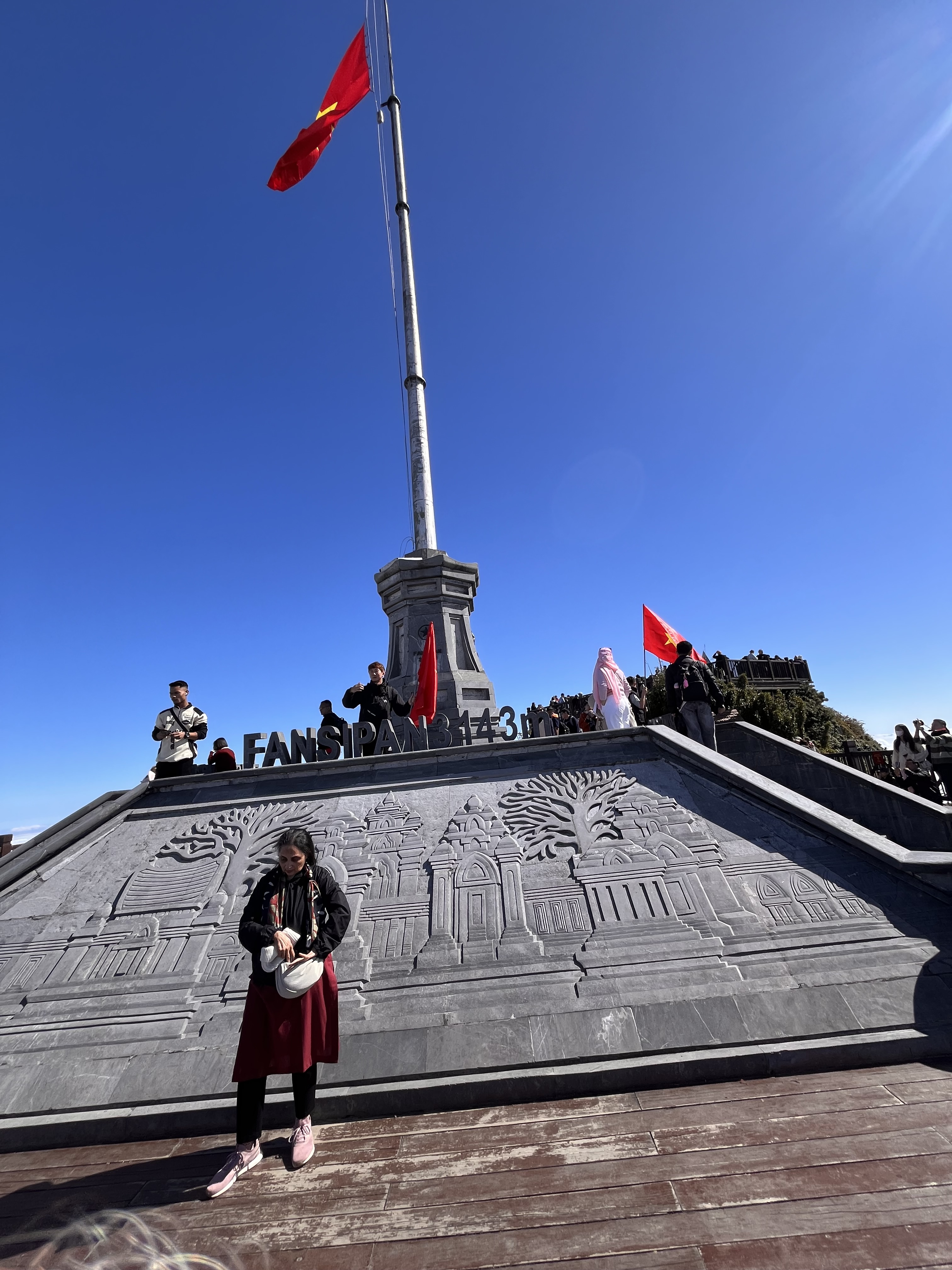
We avoided the flights of stairs leading to the great Buddha by taking the funicular rail from Go Do Quiyen station to Truc May station at the the peak. At the top of the mountain is a flagpole, a restaurant and a viewing gallery. They make for good photo opportunities and after some time we made our way back on the same route . Funicular from Truc May station to Go Do Quiyen , down the steep levels of steps and thence on to the cable car from Go Fansipan to Go Hang lien and on to the last lap from Muong Hoa to Sa Pa. On the way down we stopped by at the Vietnamese village and admired the gardens in greater detail. A good six hours well spent in the conquest of the highest peak in the Indo China region- Phan Xi Pang or simply Fansipan. The next day we retraced the car journey from Sa Pa to Hanoi Airport for our onward flight to Da Nang – Read about Da Nang in my upcoming posts

 Travel with Ramanand
[…] Fansipan via Sa Pa […]
LikeLike