
Continued from my last post Museums and a Mausoleum – Hanoi
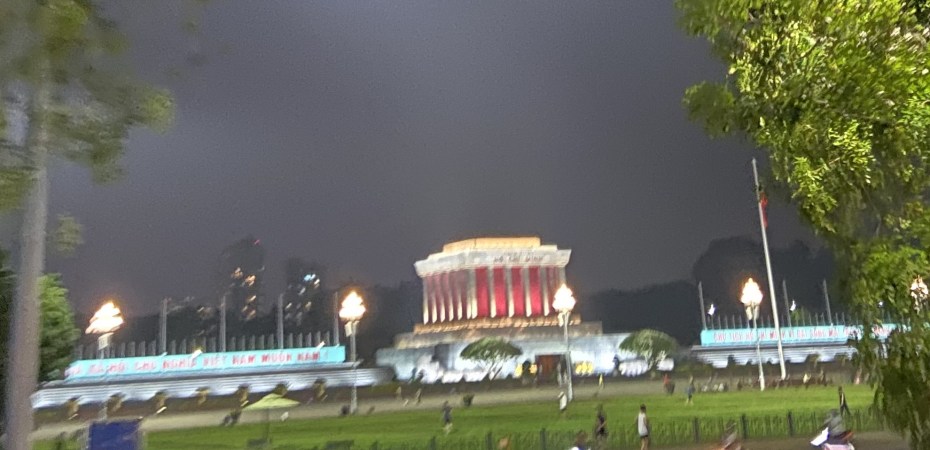
The next day we headed out to the Ho Chi Minh mausoleum in Ba Dinh square in central Hanoi. It was here that the great revolutionary leader read out the proclamation of independence in 1945 and thus is an apt location for his mausoleum. The mausoleum is located in large grounds where there are many other tourist places of interest. That Ho Chi Minh or Uncle Ho as he is affectionately called is revered shows up in signs throughout the grounds like the one at at the entry to the complex which translates to :”Forever grateful to the Great President Ho Chi Minh.
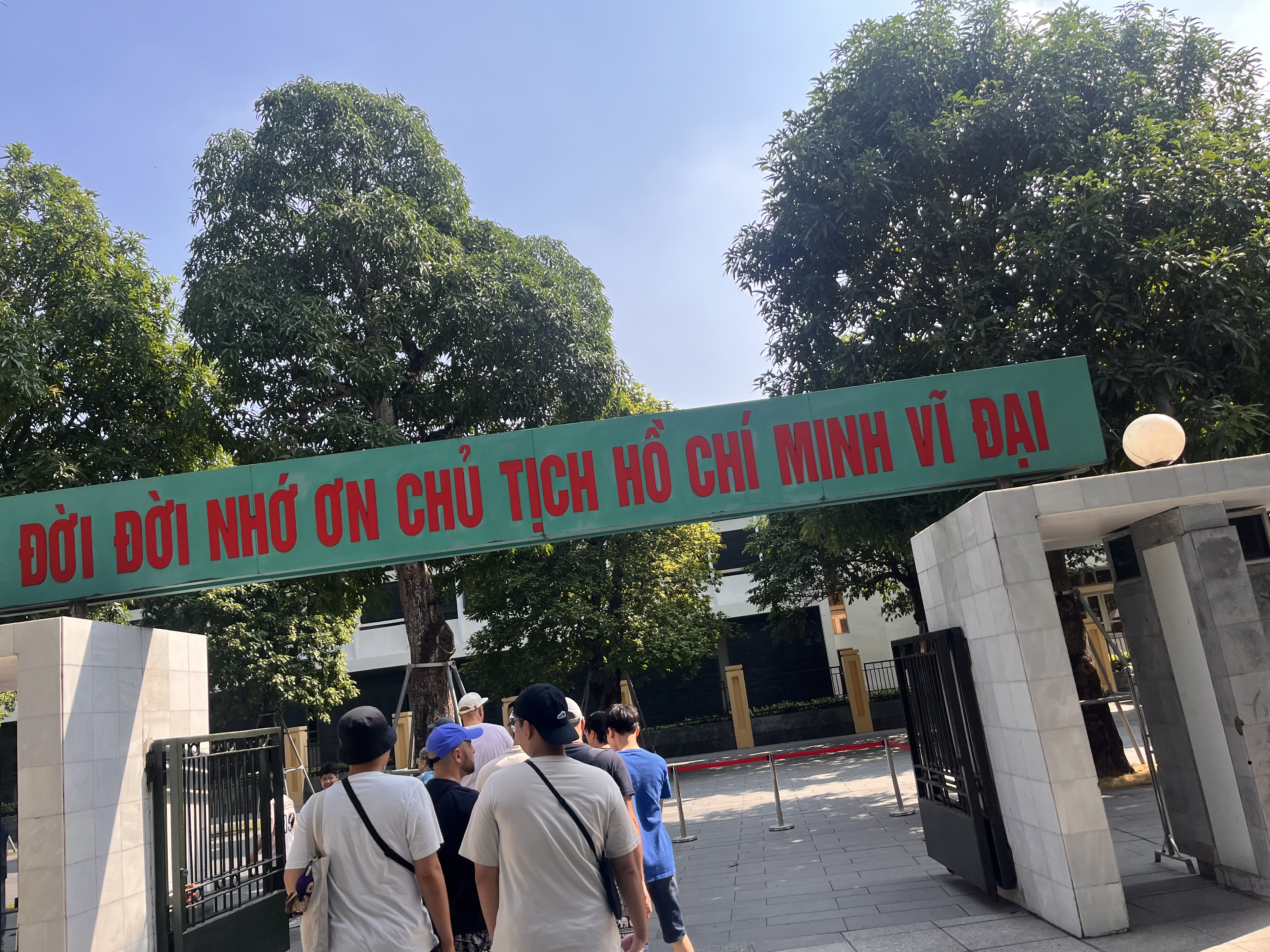
Sign at the entry gate ‘Forever Grateful to the Great President Ho Chi Minh
After a rigorous security check (where I surrendered my cigarette lighter) it is a rather long walk through the well manicured gardens. The entire route was manned by soldiers dressed in immaculate white lending a solemn air to the place. The mausoleum was built in 1973 with materials sourced from all over the country; much against the wishes of the leader who desired to be cremated. Walking though the gardens and then climbing up a large flight of steps you enter the main hall where the embalmed body of Ho Chi Minh dressed in khaki battle fatigues is displayed in a glass case. Dim lighting, rich cladding and a ruby studded bright red mural of the Hammer and Sickle , guarded by the soldiers in white creates an aura of reverence much like that of a religious place. Photography is banned in the complex and I did not capture the scene or the mood !The mausoleum is not open on all days of the week and its timings vary according to the season. There is ceremonial flag hoisting and lowering ceremony each day – Best to check with your hotel before setting out.

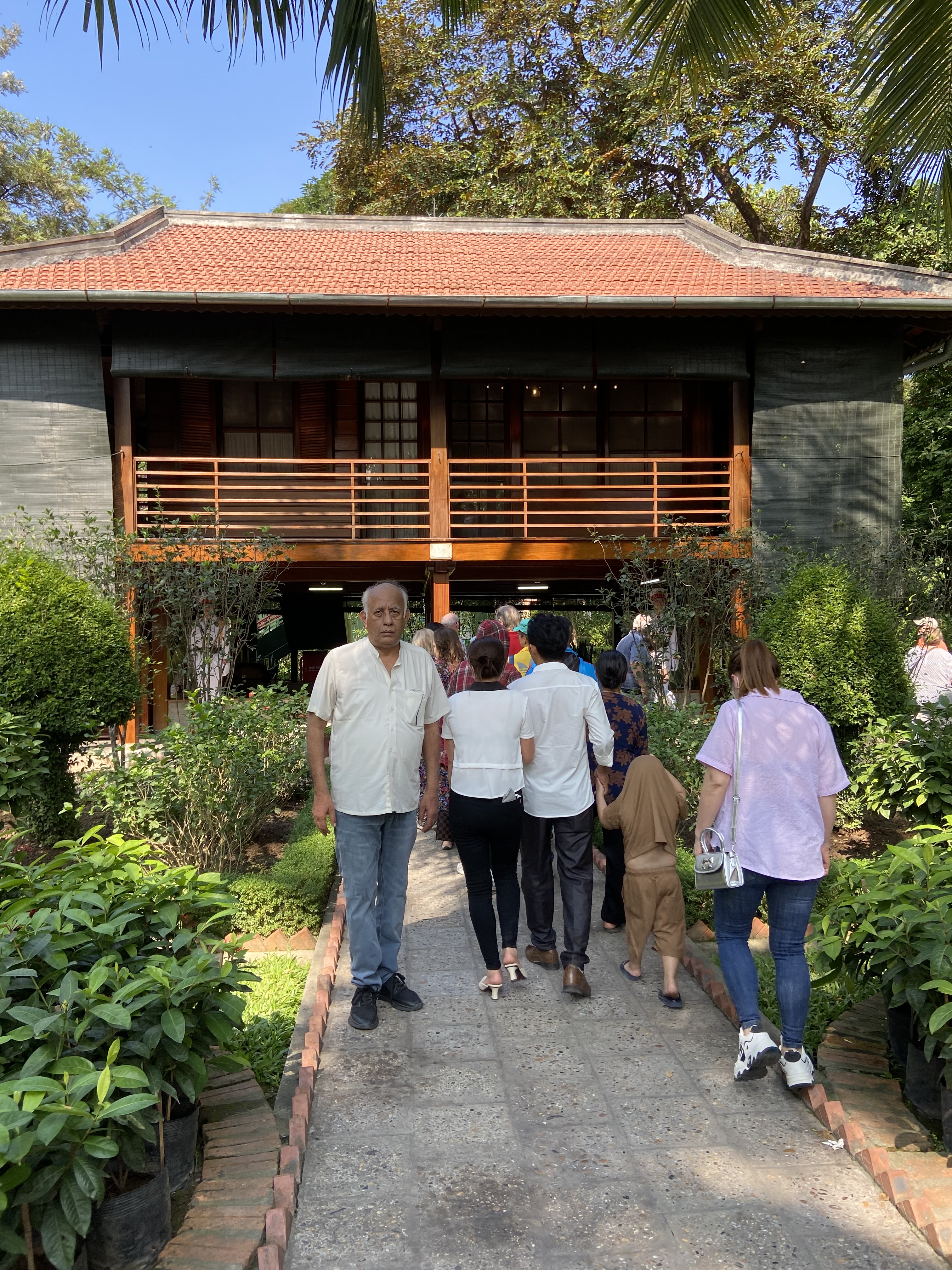
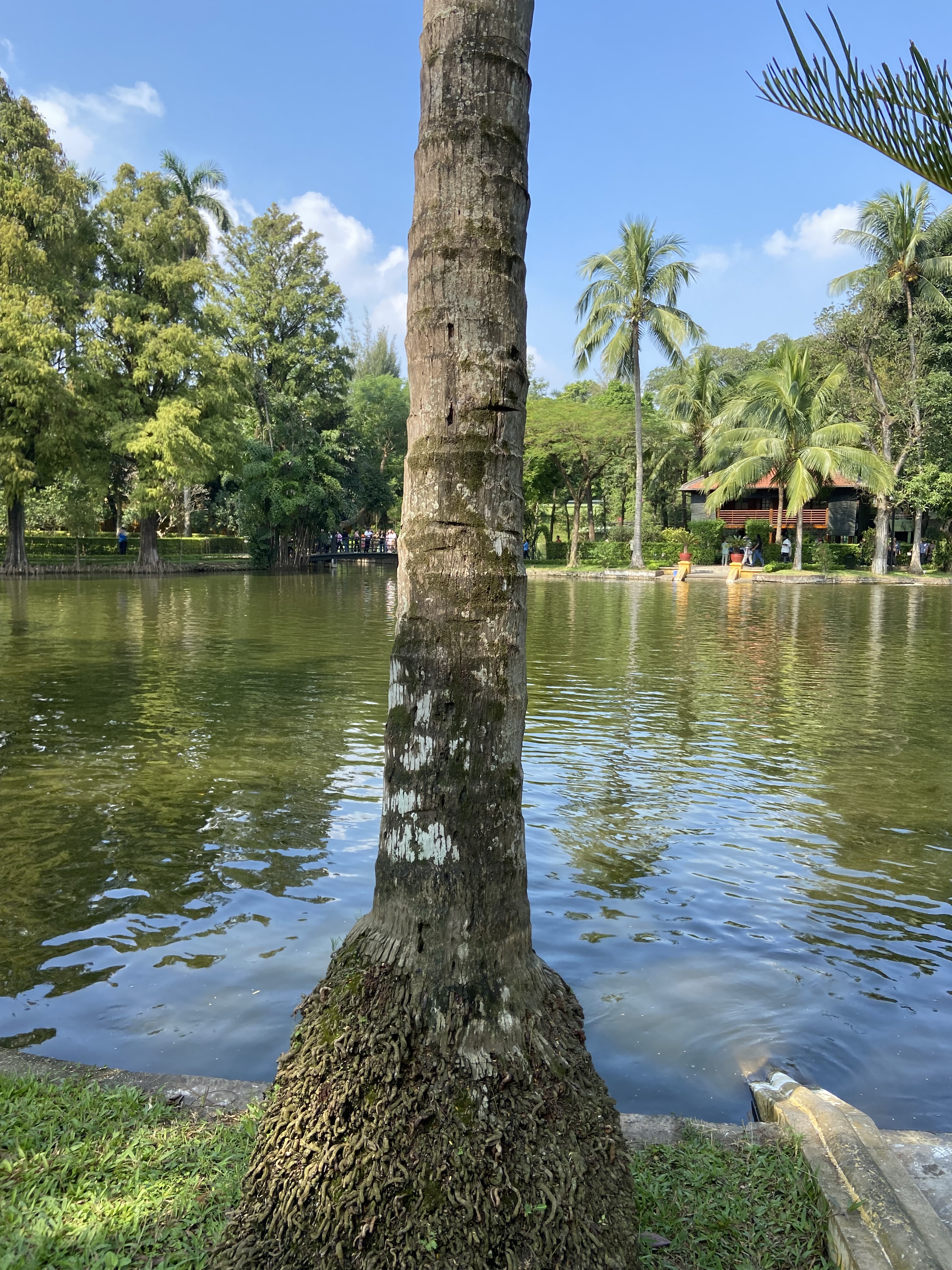
Once out of the mausoleum building there are other spots of interest on the grounds .The Presidential Palace for one – Ho Chi Minh resided in modest quarters and used the palace for formal occasions, (The Palace is not open for public viewing but its gardens are ). Ho Chi Minh’s quarters. the stilt house, the cars used by him and a thematic exhibition form part of the walking tour of the grounds. See photos below. A pleasant walk if the weather is good.


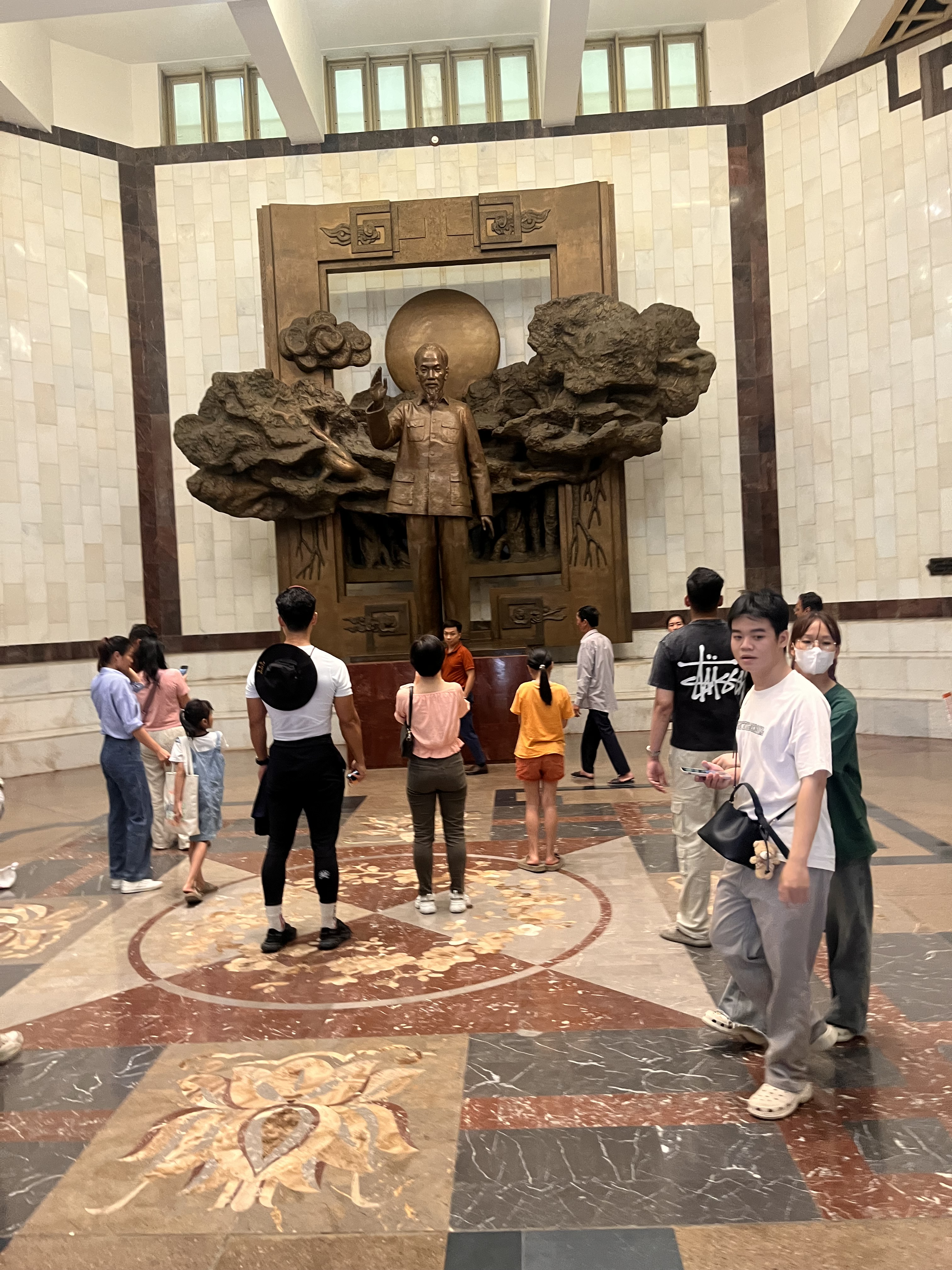
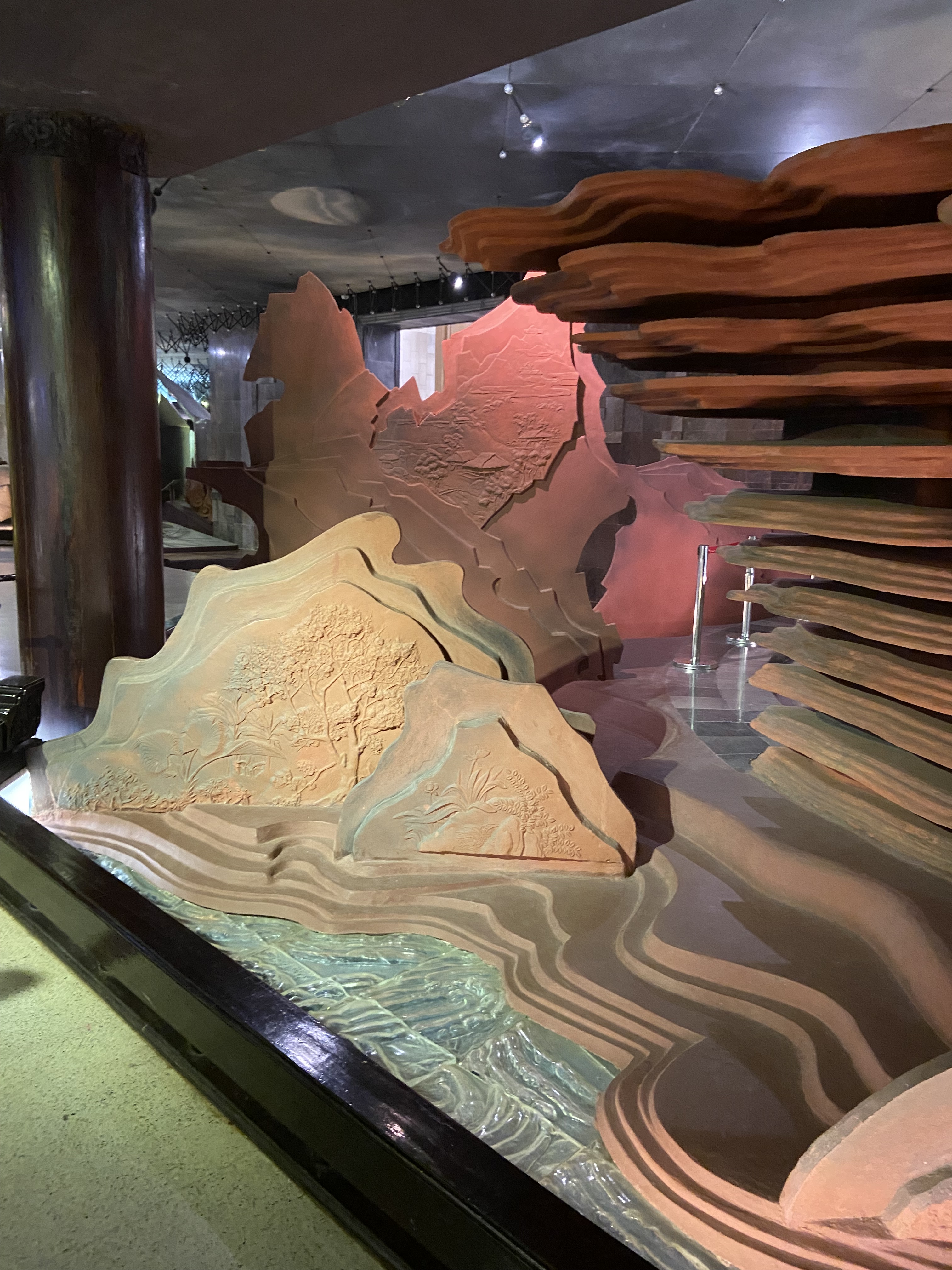
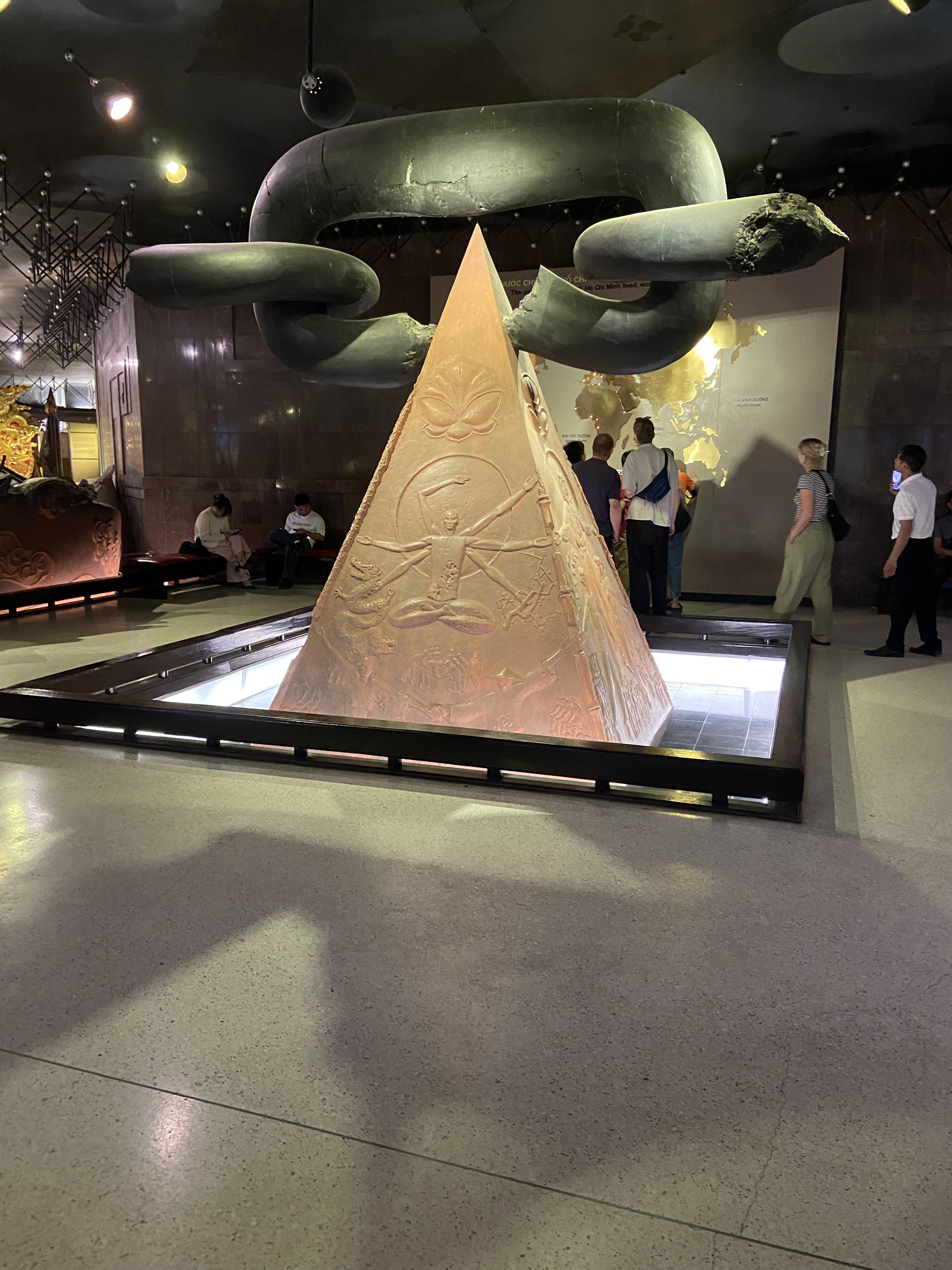
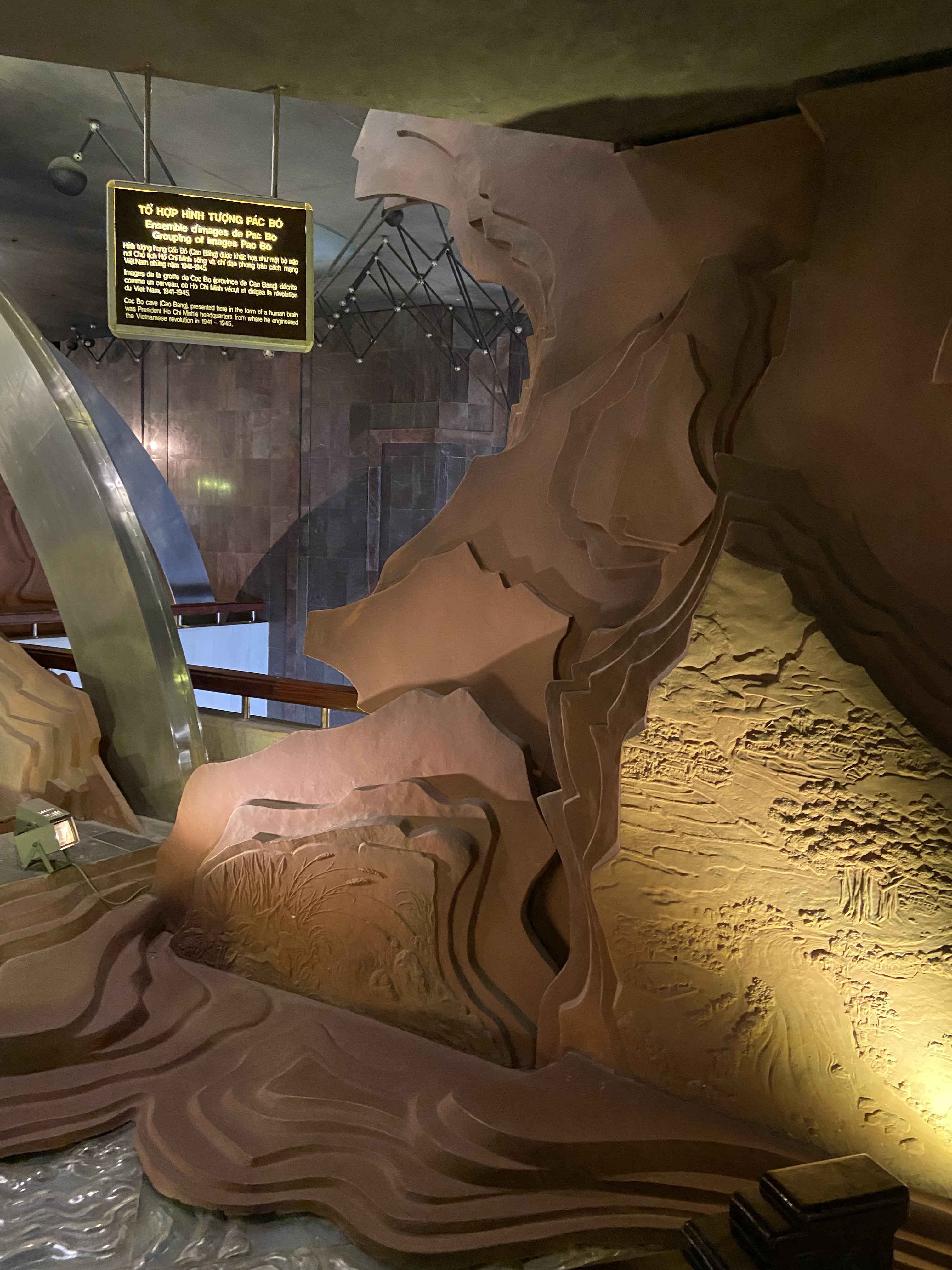
Yet another attraction is the Ho Chi Minh museum , dedicated to the life and works of the leader Ho Chi Minh and the revolutionary struggle. The building is architecturally pleasing and provides insights into to the life and struggles of Ho Chi Minh and in places somewhat different to the western view. The numerous artifacts and displays do not adequately bring out the statesmanship of the leader even though the major milestones in his political life were covered and the whole layout appeared disjointed to me. Perhaps I needed to study Vietnamese history of the period in greater detail before visiting the museum.


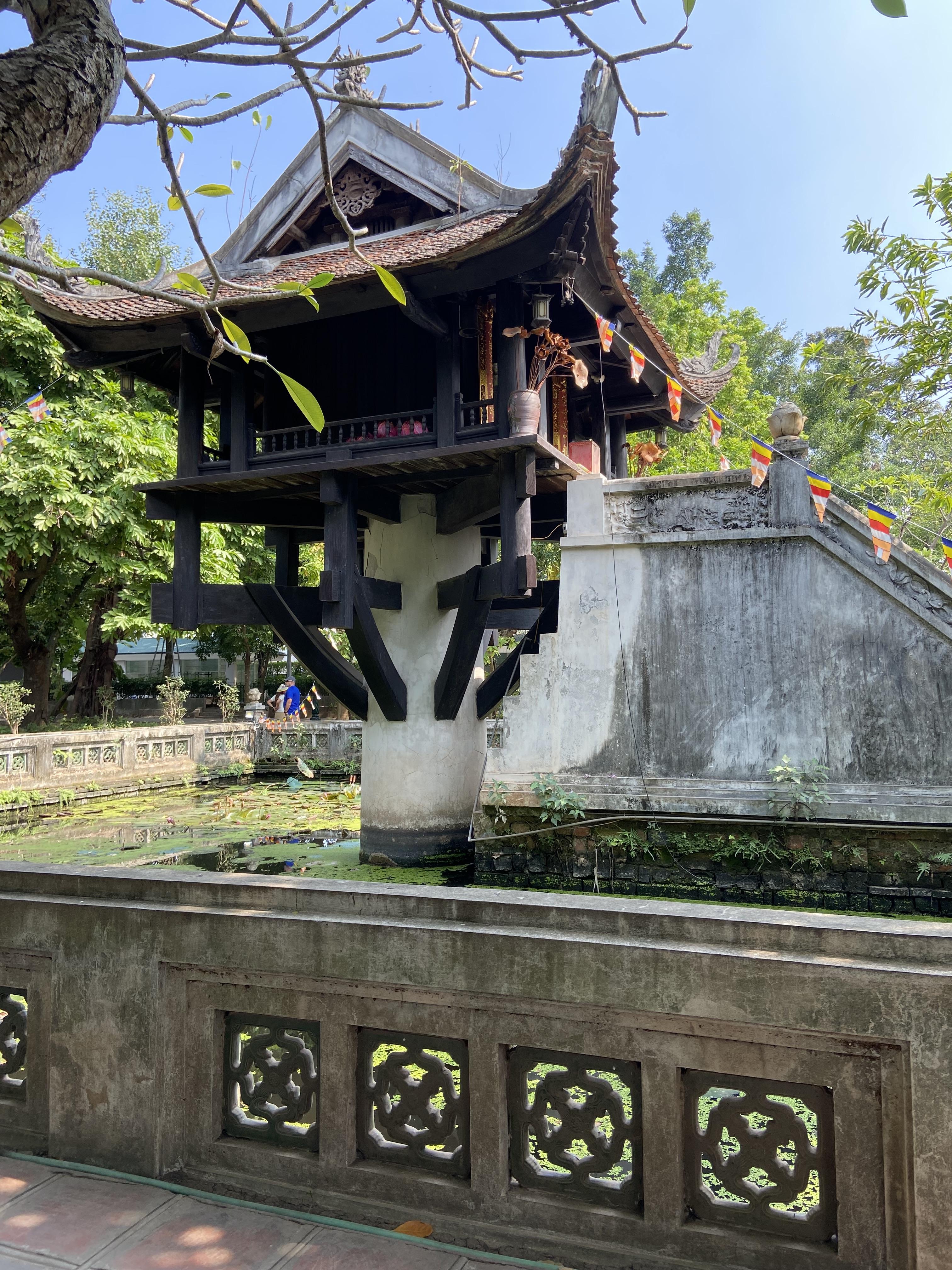
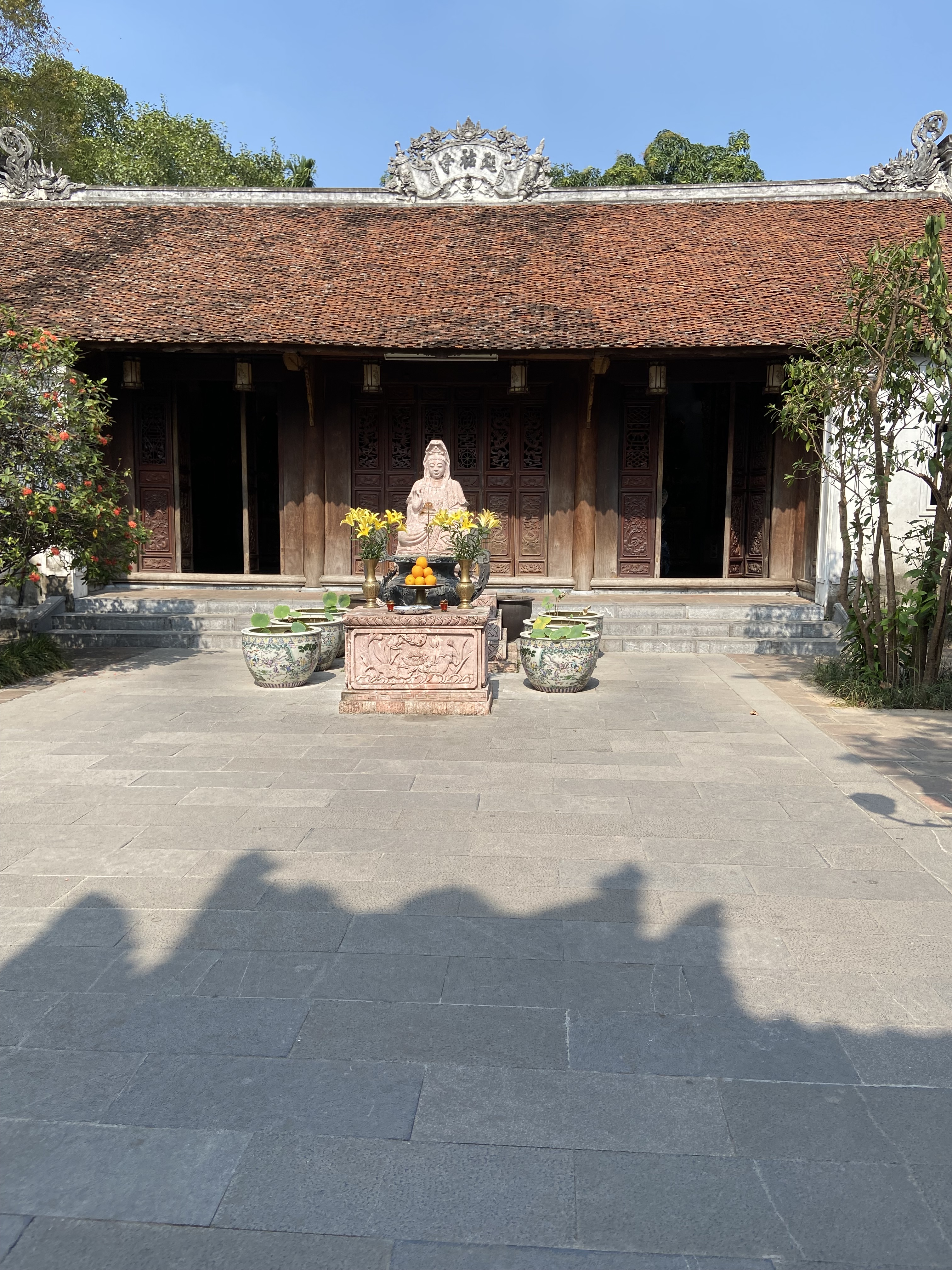
Another iconic structure, though unconnected to Ho Chi Minh is also located in the same complex-The One Pillar Pagoda. Built in the 11th century by the emperor Ly Thai Tong of the Ly dynasty as a thanksgiving to the lord for being blessed with a son. Walk around the pagoda and the pond and feel the peace and calm of a Buddhist pagoda. Before exitting the complex do consider visiting the other nearby attractions as well – Some suggestions are Imperial citadel of Thang long, the military museum , Bac Son monument and many others – Do incude them in your itinerary.

 Travel with Ramanand
[…] Museums and a Mausoleum – Hanoi – Contd […]
LikeLike